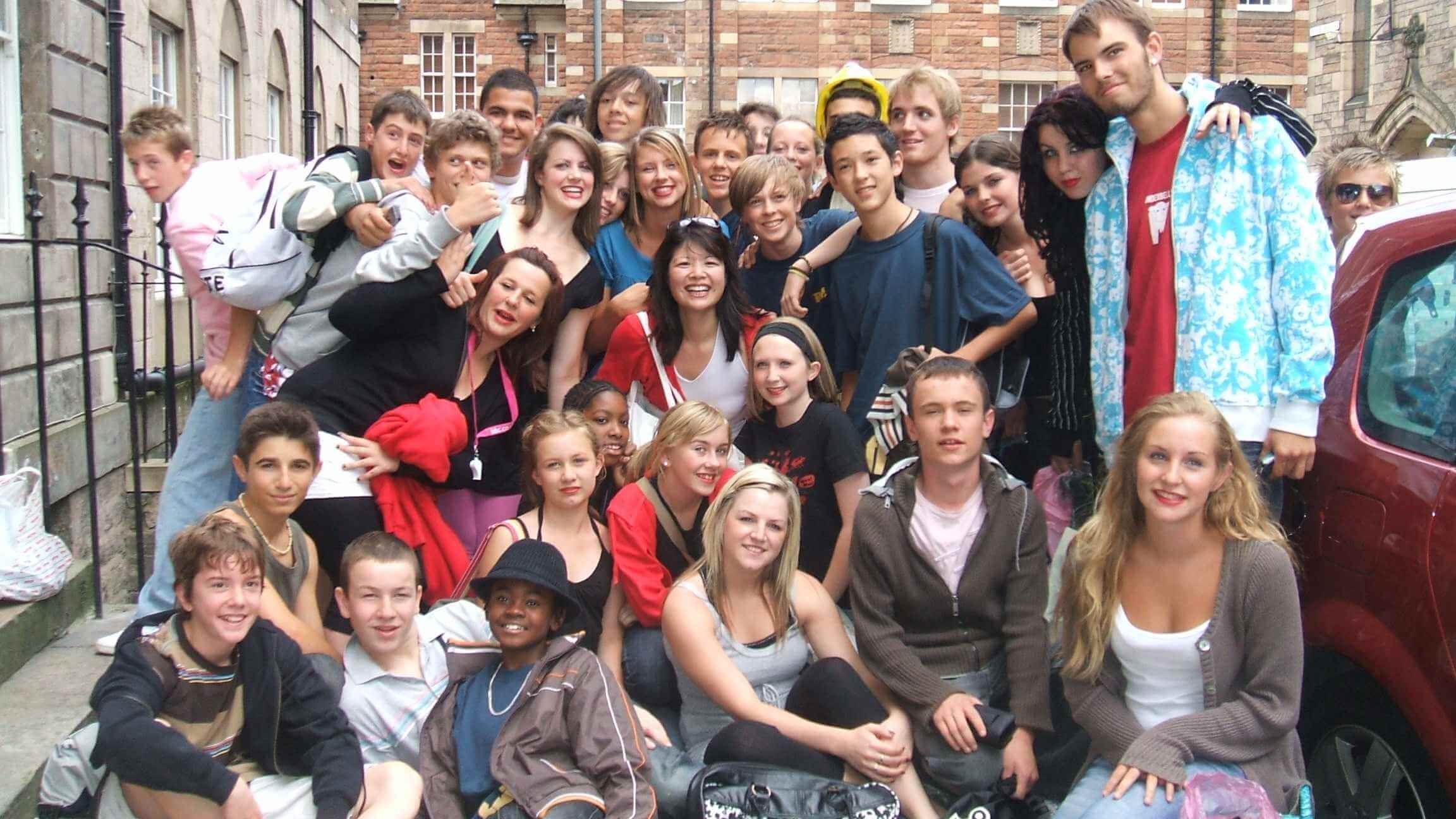
Nineteen years ago I was a young drama teacher who had the bright idea to take a cast of 40 years 7-13 students plus orchestra to perform a full-scale musical ‘Jesus Christ Superstar’ for a week at Edinburgh Fringe.
Our venue went bankrupt; we lost our giant crucifix in a Costa Coffee, we bussed to the theatre every day with bags full of props and costumes for 8 straight performances. But the students never stopped smiling. It taught me everything I know about the person anyone I teach needs to see.
Teach, Trust, and Thrive
These students were the best cast I ever had. But, when you do The Fringe, it’s not all about performance talent. The parameters of your slot mean you “get in”, set up, take down and “get out” time is included in your booking…our show ran 1:30 with no interval, we had 15 mins in and out.
But, over the years, many of the students who performed in the shows would also contribute to the production side. They implicitly understood teamwork, and that performance often rests on what is going on backstage. So by Edinburgh everyone had tasks and micro-teams. Not only would they be “Performance ready” when we left our Youth Hostel, but every person knew what to do from arrival until we left the theatre (including a bit of singing and dancing in between(!)).
We showed the leader what to do and trusted they would do it, with a staff member assigned for final decision (like when a pyro didn’t explode, the area was secured and Mr Griggs “performed” his way on and off…seamlessly; and when a mic didn’t work and “Judas” “stormed” off the stage to get the battery changed, “storming” right back on after without missing a beat nor an emotion!) By the end of the week, everyone not only knew each other’s show roles, but their production ones too, so could pick up for each other when needed.
Learning Point 1 We’re often told to meet people where they are – but sometimes you need to believe in potential. If we simply say – ‘oh they won’t be able to’ – then they’ll never have the chance to try. Of course teach people what they need to do, but then give them the opportunity to do it (with safety net at first such as a mentor or procedure if it goes wrong), and often you’ll be pleasantly surprised. It’s not that people are scared to try, they are more likely scared to fail, so make failing ok!
Build a team that’s greater than the sum of its parts
Ogilvy said that you need to build a team that’s better than you – and, here’s to you Mr Atterton (sound), Mr Griggs (lights, pyro, co-director), Mr Fitzsimmons (set, tech), Mr Eastman (photography), Mr Whalley and Mr Worden (backstage support), Mrs Whitlock (costumes), Mr Cowling (piano) and Miss Driver (choreographer and partner-in-crime), because for four years you were that.
You taught me not to micro-manage, that enthusiasm needs to be tempered with discipline, and when you know you will all get it over the finish line you can dare to dream big – and for this dream, we even had Mr Fizsimmons’ wife, Miss Driver’s mum in the orchestra, my then-husband as MD, Mr Worden calling in favours to get us extra rehearsal space, we had pyros, costume changes, our own headset mics (thanks PTA), and 39 students and ex students age ranging from 12-20 who had also learned multiple roles to cover in case of illness!
Learning Point 2: While administration might make experiences like this much harder now, doing something big is more than “blind faith” – it is a culmination of (often) a highly competent team who knows each other strengths, supports each others’ weaknesses, and together work for the same goal. To aim high, especially when you yourself are at capacity – and this is significant for entrepreneurs and those with micro businesses – you cannot carry others, there is no room to “come for the ride” – fill the role, not a relationship!
The biggest dramas are often backstage – deal with it
It was midnight with about a month to go when we got an email saying the venue had gone bankrupt and our show was homeless (alongside 29 other productions.)
Cut to a whole evening of frantic emails to new venues – and thankfully because this was a publicised situation, venue hosts were already on side and overnight – thanks to Roxy Venues, we had secured a better (bigger!) space, a better time, and a cheaper price…and no-one needed to know.
Learning Point 3 - Do I think not telling people until something really can’t be done is a good thing? Genuinely I believe it depends on whether you think you can resolve it without issue, and also whether you believe telling others is really going to help.
Reflections
Looking back to 2007, I realise now what a privilege it was being part of that “arts haven” we created. We built something of scale, of standard, and very very special. People didn’t just play their part, they elevated it – and the results showed. But the lesson for me is: such a team isn’t necessarily a rare or “lucky” find, it can be cultivated - but not through compensating, or asking less, as seems more customary now.
Think of a time when things worked at their best for you. What standards made that possible…and are you still holding them now?
Back then, I was brave enough to push, to build a team that ran alongside me, and to say “it’s ok” if you don’t want to come. I think its time for me to channel 2007 energy again. What about you?
Dr Audrey Tang (AFBPsS) is an award-winning author, chartered psychologist and leadership coach.

 Share article via email
Role Modelling The Energy You Want To Encourage
Thanks for signing up to Minutehack alerts.
Brilliant editorials heading your way soon.
Okay, Thanks!