'We recognise that many of our users feel that they have low skills, poor confidence and possibly a negative view of education.'
How We Improved Prisoner Education With Hackathons
'We recognise that many of our users feel that they have low skills, poor confidence and possibly a negative view of education.'
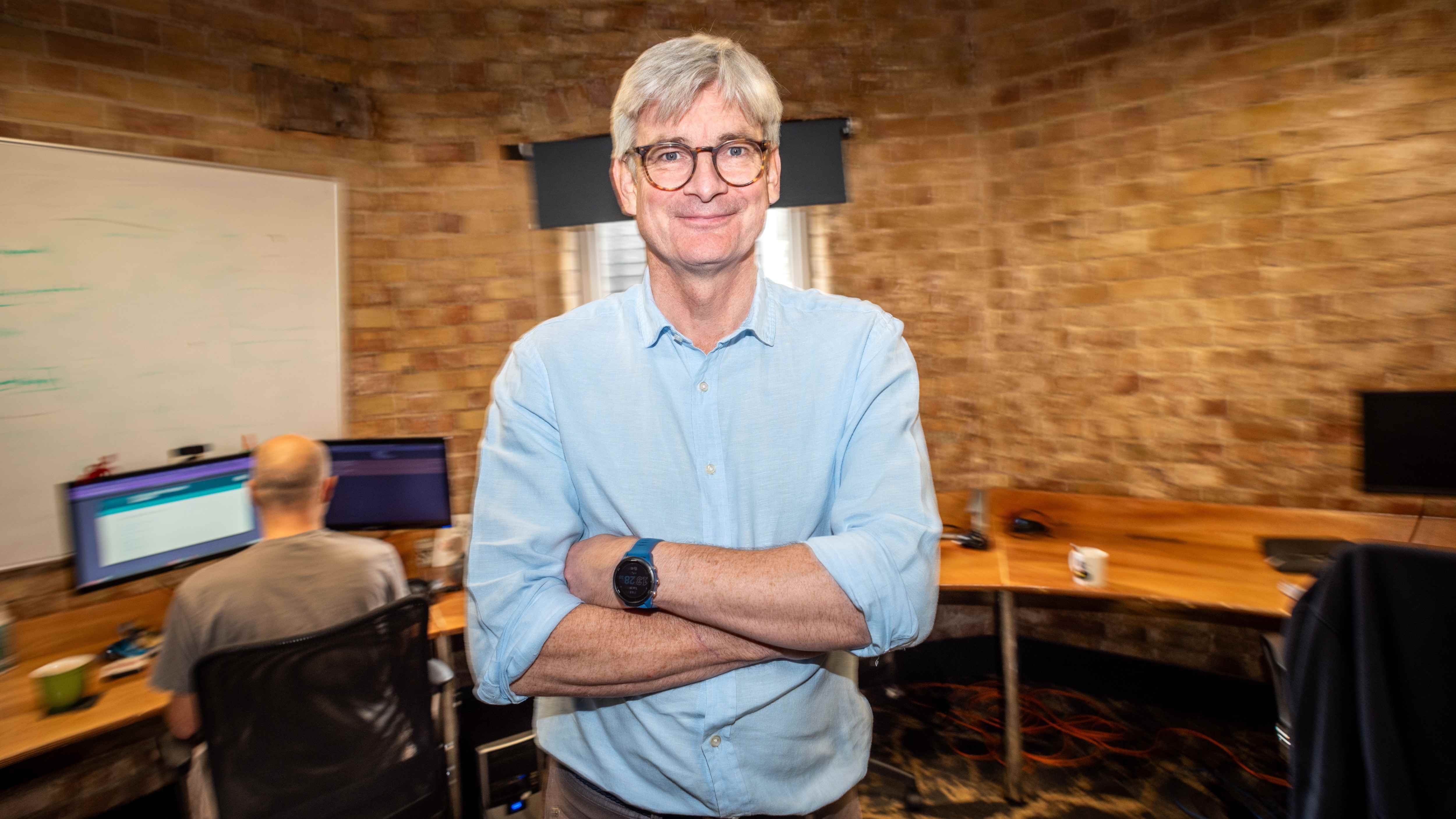
EdTech CEO James Tweed founded his company Coracle in 2006. The business operates in some of the world's toughest environments, including the maritime industry, prisons and police custody suites. Tweed explains how giving staff maximum freedom unlocks a wealth of creative ideas
Often, the simplest questions lead to the best answers, ideas that can be truly groundbreaking.
My company Coracle provides access to learning and skills development in a wide range of environments. We have a team of developers who all love to code and experiment. So, two or three times a year, we down tools from ‘business as usual’ and organise a ‘hackathon’.
Hackathons are well known in the tech world but, for those unfamiliar with them, they are typically a concentrated period of time - often a couple of days - where developers are given license to test new ideas and play.
Teams and individuals come up with a number of problem statements and are allowed to experiment without restriction. Many of the experiments will fail but that’s perfectly fine. Innovation usually only comes after many failed experiments.
You never quite know what you’re going to get from a hackathon. As a CEO, it would be very easy for me to become too involved. Instead, I’ve learned that my role is to create the conditions that allow my team to call the shots.
They understand our mission about ensuring no-one is isolated from learning opportunities. How we deliver on that mission is where their creativity comes to the fore.
AI cellmates
Coracle’s Osprey-VLE system operates in most of the prisons and young offender institutions in England and Wales. These are a challenging but intriguing set of users.
Many prisoners have been excluded from education - far more than the national average. About 60 percent of prisoners have been excluded and about 40 percent of those permanently. In the population as a whole, the figure is less than one percent.
Neurodiversity and learning problems are also far higher in prisons than in society as a whole. Put all of this together and it’s understandable that many prisoners are suspicious of education.
A number of the team started wondering how AI could be used to work on our platform. The team also began to wonder what insights into prisoners' learning and skills they might discover.
We started discussing the psychology of prisoners and their different learning styles. During one of the hackathons we asked: how can we make the experience better? How can we better tailor access to education to the learner?
So the team started creating AI tools that sit in the background of the Osprey-VLE system and build understanding around how a prisoner engages with education. The idea of a kind of ‘AI cellmate’ emerged. A programme that got to know the prisoner and offered them tools that support their learning, without expecting them to ask for help.
The platform now uses a lot of visual storytelling and immersive technology to keep users progressing. This is particularly useful for those with acute speech, language and communications needs (SLCN) of which there are many in the criminal justice system.
This approach became a reality after a hackathon.
The best questions
A good hackathon is often inspired by simple questions. We simply started asking ‘how can we make things simpler for users’. This started a discussion that led to creation of an ‘Accessible Content Engine’ (ACE) - a software framework that formats complex materials into low-literacy and neurodiversity-friendly digital content.
The ACE software converts dry and complex educational materials into something anyone can read. It makes them less threatening and much easier to access for learners with conditions that create barriers to learning. It also provided visual milestones that help capture short attention spans.
Mission-led developers
We started out working with seafarers - people far out in the ocean with no Wi-Fi connection. Meanwhile, in prisons the internet is banned, and users often have a complex educational background. So, we are innovating for those who have been excluded and who aren’t connected.
We think of ourselves as mission led developers and we firmly reject the "one size fits all" model.
Our systems don’t rely heavily on infrastructure - users don’t need to be online all the time. Instead, they can work offline but receive periodic updates.
We also recognise that many of our users feel that they have low skills, poor confidence and possibly a negative view of education. So we bring them into learning with a ‘softly softly’ approach.
Often, a user's first experience of a Coracle laptop is playing a game such as chess or watching a video. But over time, as confidence and usage grows, we are able to ramp up the content available and also record data regarding their personal growth.
It’s this way of thinking that helped Coracle become a certified B-Corp and to win a King’s Award for Enterprise for Promoting Opportunity.
Many of our developments come from hackathons. It reminds me of something very important: to unlock your team’s creativity you need to give them freedom and allow them to have some fun. It’s a paradox that by giving them so much freedom, they often find serious business solutions.


 Share article via email
How We Improved Prisoner Education With Hackathons
Thanks for signing up to Minutehack alerts.
Brilliant editorials heading your way soon.
Okay, Thanks!