How Disney Can Manage Bob Iger’s Retirement And Succession With Grace
The goal of succession is so much more than a smooth handover.
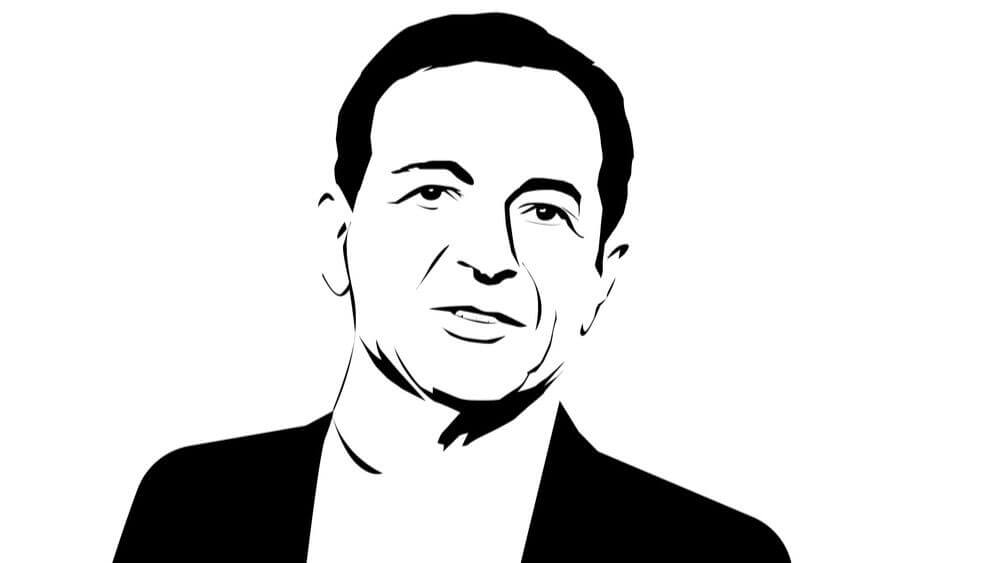
When Bob Iger stepped down as CEO of Disney in 2020 after 15 years transforming the company, it appeared to be a textbook ending. The architect of Pixar, Marvel and Lucasfilm’s integration into Disney handed the reins to a successor and moved into the role of executive chairman. From the outside it looked polished, controlled and celebratory.
Two years later, Iger returned.
In our work with leaders, we regularly see a version of this. Organisations investing enormous energy in strategy, succession planning and leadership appointments, only to find the incoming leaders not fully settling and embedding effectively into the role. Working with these leaders often uncovers a mismatch between the amount of time, energy and investment that went into onboarding, and the attention given to the ending itself.
Every aspect of how a leader leaves has an impact on whether the transition strengthens or destabilises the organisation. In our book Good Bye, we share a simple framework: Reality, Emotion, Accomplishment and Ritual (REAR), offering an approach to succession planning that enables leaders to leave in a way that fully enables the future to begin.
Reality: the seat must genuinely be vacated
Succession planning is often treated as an operational and future focused exercise: appoint the successor, manage communications, reassure stakeholders and move forward.
However, the first responsibility of any leadership transition is to face the full reality of what is ending - for the leader, for those they lead, for the organisation and for the wider systems of stakeholders and relationships. The reality of what is ending is invariably more complex than is being assumed. Paying closer attention to what is ending helps make the important distinction between hopes and intentions, and what will actually shift once the seat is vacated.
Two deceptively simple questions are crucial here:
Is the organisation strong enough to succeed without you?
Have you genuinely made it possible for someone else to exceed your success?
For long-serving leaders this can be difficult. Over time, culture, strategy and relationships often become intertwined with the individual at the centre. Even with the best intentions, remaining close for continuity can blur the boundary between the past and the future.
If the boundary remains blurred, succession becomes harder for the person stepping into the role, and the impact of that ripples on into the future.
Emotion: the importance of leadership maturity
Leadership transitions are often treated as rational events. In reality they carry powerful emotional ripples through an organisation.
For some people a leader’s retirement brings excitement and fresh opportunity. For others it can trigger uncertainty, loyalty conflicts or a sense that an era has ended.
Successors themselves often experience a complex mix of anticipation and pressure, inheriting not only the role, but also the legacy and expectations attached to it.
When the emotional dimensions are avoided or unexpressed they don’t disappear. Instead, they resurface indirectly, shaping alignment, relationships and confidence across the organisation. This is why effective succession requires the leadership to acknowledge and respond to emotion, alongside ensuring the strategic and operational readiness of the organisation.
Accomplishment: honour the legacy without sabotaging the future
Every leadership ending is witnessed.
Employees, investors, partners and observers are all watching how the organisation marks the departure of its most visible leader. How their accomplishments are acknowledged sends powerful signals about what the organisation values.
Handled well, this moment allows the leader’s achievements to be properly recognised. This includes the results as well as the judgement, skills and qualities that made them possible, enabling the organisation to retain insight into how success was created.
But there is an important balance to strike. If the narrative becomes 'no one will ever match this leader', the successor begins under a shadow. Healthy endings honour the legacy while reinforcing a deeper truth: the organisation is larger than any individual who has led it.
Ritual: the moment that makes change real
The final stage of a leadership ending is ritual: the deliberate act of marking that a transition has occurred.
Ritual creates a visible moment where authority passes, boundaries shift and the organisation recognises that a new chapter has begun. Without this clarity, succession risks becoming overlap. The former leader remains present informally while the new leader attempts to establish authority. This is where there is potential for confusion, comparison and power struggle to take root. Successful transitions recognise that moments of ceremony and marking of handover are important for celebrating the individual, and equally important for offering clarity to those remaining.
The final act of leadership
For founders and CEOs alike, retirement is both personal and symbolic. It represents the release of influence, identity and responsibility built over many years. It requires facing the reality of the vacated seat, acknowledging the emotional ripples of change, honouring what has been accomplished and creating a clear moment that makes the future possible.
The goal of succession is so much more than a smooth handover. It is an ending that allows the next leader to truly begin and is why leaving well is one of the most demanding acts of leadership.
Alison Lucas, of Randolph Partnership Ltd, and Lizzie Bentley Bowers, of The Causeway Coaching Ltd, are co-authors of Good Bye: Leading change better by attending to endings (Practical Inspiration Publishing) and professionally accredited coaches and facilitators.




 Share article via email
How Disney Can Manage Bob Iger’s Retirement And Succession With Grace
Thanks for signing up to Minutehack alerts.
Brilliant editorials heading your way soon.
Okay, Thanks!