When budgets are tight, people naturally gravitate towards quick, visible results because uncertainty makes slower, less tangible processes feel riskier.
In A Short-Termist World, Drawn-Out Brand Strategising Needs To Sharpen Up
When budgets are tight, people naturally gravitate towards quick, visible results because uncertainty makes slower, less tangible processes feel riskier.
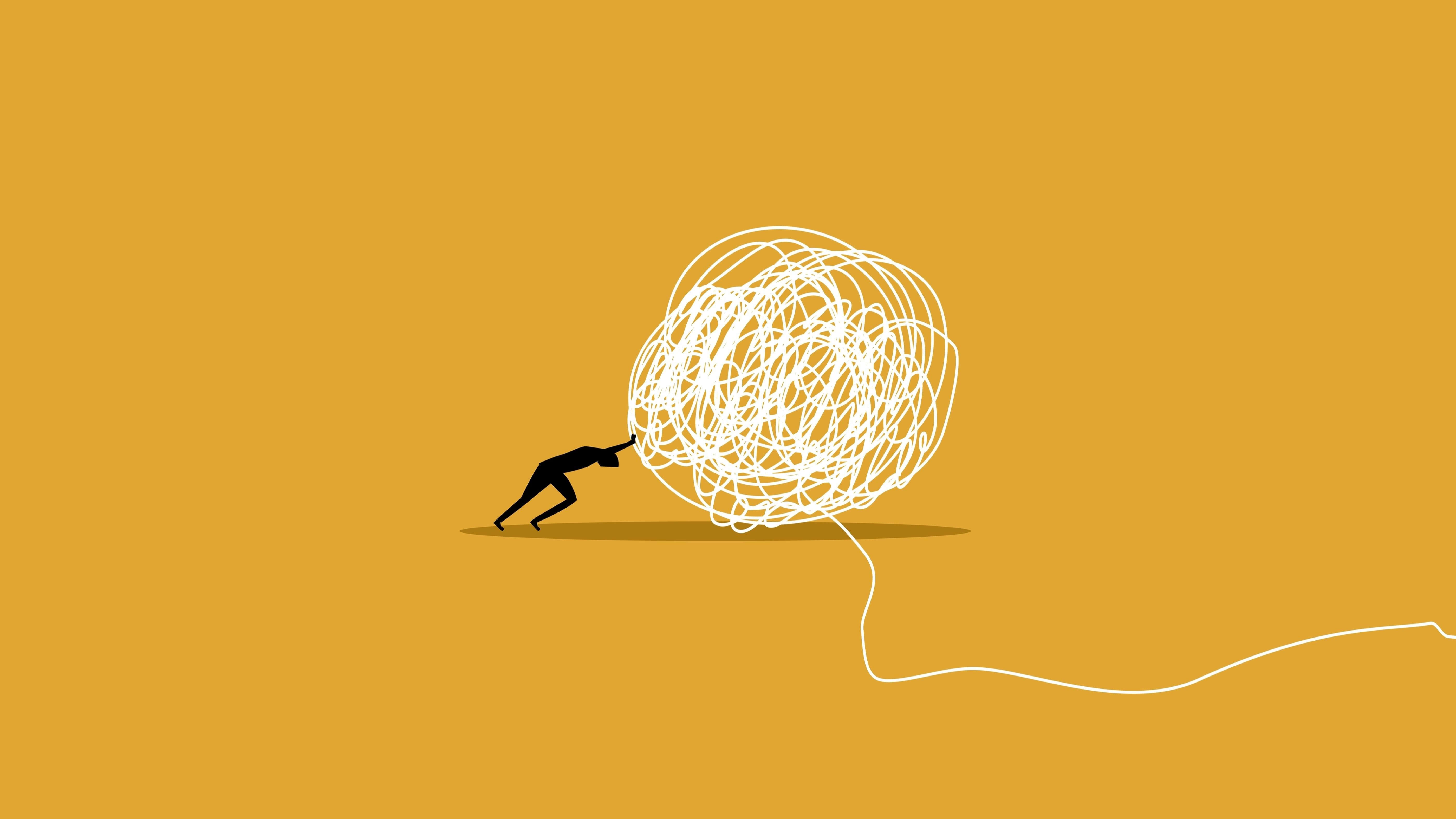
Many of us in the brand development world are seeing investment steadily squeezed as short-term performance takes priority – an imbalance confirmed by the latest IPA Bellwether Report.
It’s hardly surprising. When pressure builds, organisations gravitate towards immediate returns because long-term strategy rarely provides the quick reassurance that anxious stakeholders are looking for.
But this isn’t just about shrinking budgets or tighter timelines. It’s about what happens inside organisations under pressure – how decisions get made, how alignment breaks down and how work actually moves forward.
Yes, economic constraint is forcing sharper choices and AI is accelerating the pace and volume of output. Together, they’re exposing a structural weakness in how brand strategy is typically developed. The faster things move, the more decisions need to be made in real time – and the more problematic slow, linear and closed processes become.
It’s revealing something else, too. The space for human engagement – real thinking, shared understanding, live decision-making – is becoming more important. Because while AI can speed things up, it can’t replace the messy, nuanced, often contradictory process of getting people aligned around what matters.
And that’s the real issue. It’s not that marketers have lost belief in brand building. It’s that the way strategy is often created no longer fits the environment it’s meant to serve.
Long timelines, fragmented input and polished presentations delivered weeks – or even months – after the fact drain momentum. By the time strategy is revealed, the context has shifted, energy has dissipated and stakeholders have mentally moved on. What should be a unifying exercise becomes abstract, distant and owned by a few rather than understood by many.
In that vacuum, performance marketing fills the gap. Not because it’s inherently more effective, but because it offers something strategy often doesn’t: immediacy, visibility and a sense of control.
When budgets are tight, people naturally gravitate towards quick, visible results because uncertainty makes slower, less tangible processes feel riskier. Hitting those immediate KPIs becomes the main goal.
Strategy shouldn’t feel like a reveal
This points to a deeper problem. There’s a long-standing habit in the brand strategy and design sector that we need to change. Strategy is often crafted behind closed doors and then unveiled in a big ta-dah moment – as if alignment can be achieved through presentation alone.
But most organisations aren’t short of ideas. What they lack is shared understanding and spaces where different perspectives can surface, where tensions can be worked through and where decisions are made collectively rather than handed down.
When thinking happens in the open, something changes. It becomes collaborative and energising – and something people believe in because they’ve been part of it.
And that belief – the buy-in, really – is what determines whether strategy lives or dies.
Delivery is where strategy proves itself
There’s also a persistent misconception that strategy happens first and delivery follows. In reality, the most important strategic questions emerge when the work is underway.
That’s why long, protracted strategy phases are increasingly at odds with how organisations operate today. In many cases, they can be replaced, or at least complemented by shorter, more focused working sprints.
Bringing the right people together for a concentrated period forces the questions that matter into the open:
What actually matters most?
What are we willing to drop?
Where do we need to compromise?
Who decides and how?
These aren’t questions that benefit from distance or delay. Left unresolved, they undermine even the most polished strategic narrative. Addressed early and collectively, they create clarity that holds up in delivery.
This approach isn’t about pretending complex problems can always be solved in a few days. Not every decision will be final and not every stakeholder will be available. But compressing the timeline changes the quality of the conversation by reducing deferral, limiting over-analysis and making gaps in alignment immediately visible.
Compressed, collaborative thinking
However, if traditional processes are too slow and disconnected, the alternative isn’t simply to move faster. It’s to work with greater focus and shared intensity.
When timelines compress, clarity often expands because there’s less room for overthinking and more emphasis on what matters. The distance between thinking and doing narrows, creating greater continuity between strategy and execution.
And, perhaps unexpectedly, people find more value in the process because they’re engaged, they can see progress and they feel heard.
We find that in this setting, relationships aren’t forced – they emerge as a by-product of doing meaningful work together. The whole process becomes a galvanising effort, reconnecting team members and reinforcing business intentions and values.
Approaches like our Basecamp model are built on this principle: compress the timeline, increase the intensity and involve those responsible for delivery directly in shaping the outcome. The aim is not just discussion, but decision – reducing the need to revisit the same questions weeks later.
Rather than stretching strategy over months, you concentrate it into days. Rather than presenting back to stakeholders, you build it with them. And rather than separating strategy from execution, you design with real-world application in mind.
Why this matters now
In a pinched market, protecting brand investment is about earning confidence in the short term. That confidence comes from visible progress and shared ownership, leading to decisions that stick and strategies that feel grounded rather than theoretical.
Slow, fragmented processes struggle to deliver that. We’re finding that more open, collaborative ways of working are starting to because they reflect the pressures organisations are under today.
The opportunity isn’t simply to move faster. It’s to think better together and to make brand strategy something people actively shape. That’s how brand will regain its relevance – not as a long-term ideal, but as a practical tool for navigating uncertainty now.
Martin Coyne is co-founder of brand and tech agency Bond & Coyne and creative careers platform WonderWhat. He and his team embolden and amplify brands by combining strategic consultancy, creative studio and technology development services.


 Share article via email
In A Short-Termist World, Drawn-Out Brand Strategising Needs To Sharpen Up
Thanks for signing up to Minutehack alerts.
Brilliant editorials heading your way soon.
Okay, Thanks!