AI And The Future Of Creative Industries
In the end, AI may not diminish human creativity at all.

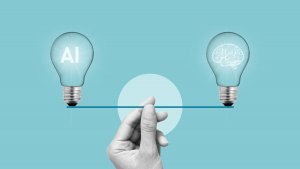
Artificial intelligence is reshaping nearly every corner of the creative industries, not in the distant, speculative future but in the immediate, everyday reality of how we work. For decades, creators have adapted to new formats and new technologies, yet the arrival of generative AI has introduced something different, an uncomfortable blend of promise and uncertainty. Some fear a creative landscape overwhelmed by machine-generated content, while others see the most powerful artistic tool since the birth of the internet. The truth is probably quite complex and more entwined with economic, political, philosophical and ethical forces than any of us really realise, but my take is: AI is not here to replace creators, but to transform the conditions in which creativity happens.
Across music, design, writing, film, gaming, and marketing, the starting point of a project has fundamentally shifted. What previously required technical skill, expensive equipment, or long development cycles can now begin with a simple prompt. A designer can generate hundreds of visual concepts in seconds. A songwriter can explore new musical ideas without even stepping into a studio. A filmmaker can draft entire storyboards instantly. But while AI can accelerate options, it cannot provide the intention behind them. It cannot offer lived experience, emotional perspective, or a sense of meaning. In short: it doesn’t have personality. In my book Make Music Your Business, I talk about how essential it is to know your history, understand your message, and shape your identity before you think about the output. AI simply amplifies the importance of those ideas. The technology can widen your creative canvas, but only you can decide what picture you want to paint.
What AI does exceptionally well is lower the barrier to entry. A teenager with a laptop can now produce visuals that would previously have required a full creative team, or create convincing music demos without formal training. This opens the door to new voices that may never have had any access to traditional pathways into the industry. But these god-like tools of creativity also bring challenges. With millions of new pieces of content generated every day, visibility becomes even harder. Craft still matters, but so does clarity of message, consistency, and strategy. I often stress to clients the importance of staying true to your message, especially in a world that constantly pulls you in different directions. AI makes the noise louder, which means your message must be clearer.
Authenticity becomes a form of currency. As generative outputs become easier to produce, audiences instinctively value work that feels grounded and personal, irrespective of the quality. They can sense when something has been created without intention, without a story, without a lived emotional thread behind it. Paradoxically, the more perfect AI-generated imagery, writing, or music becomes, the more people crave the imperfections and idiosyncrasies of human creativity. This reinforces an idea that people don’t connect to perfection, they connect to honesty. AI cannot replicate the vulnerability or experience behind a lyric, a design, a scene, or a narrative. It can only remix what already exists.
However, the rise of AI also brings ethical and economic questions that cannot be ignored. Creators across industries are asking how their work is used to train models and whether they will be compensated when their style, voice, or likeness can be replicated. Regulators are still trying to catch up. To ensure both innovation and protection, the industry needs transparent systems of consent, attribution, and value-sharing. As much as AI accelerates creativity, it must not undermine the rights of the humans who built the culture it draws from. This tension between innovation and protection will define the next phase of the creative economy.
Some worry about the future of jobs, but history shows that technology rarely eliminates creative roles. The introduction of digital audio workstations created new kinds of producers and new genres. The rise of streaming reshaped filmmaking rather than ending it. AI will create new creative roles, people who shape, curate, refine, or direct AI-generated ideas, and it will elevate the value of human taste, judgment, and vision in many ways. In practice, this means the creators who thrive will be those who integrate AI into their process without letting it override their identity.
Despite the technological leaps, the essence of creative work remains unchanged. People go to concerts, exhibitions, theatres, and readings because they crave human connection. They want to feel something real, something shared, something intentional. AI can imitate style, structure, and technique, but it cannot imitate humanity. It cannot stand on a stage and tell a story that came from lived experience. It cannot replace the emotion behind a hand-drawn sketch, a vocal performance, or a paragraph shaped by personal truth.
The future of the creative industries is not a competition between humans and machines but a collaboration between them. AI will take on the repetitive, time-consuming tasks that once slowed creators down, allowing human beings to focus on vision, meaning, story, personality, and craft. The artists, writers, filmmakers, and creators who will flourish are those who see AI as a tool, one that expands possibility rather than diluting identity.
In the end, AI may not diminish human creativity at all. It may instead push us to deepen it. It challenges us to refine our voice, sharpen our message, and understand our own story more clearly, ideas that form the backbone of Make Music Your Business. And perhaps that is the real future: not an era where machines create instead of us, but one where humans create with greater clarity, purpose, and originality than ever before.
Ben Hughes (Hughzy), is a musician and author of Make Music Your Business from Liverpool, UK.



 Share article via email
AI And The Future Of Creative Industries
Thanks for signing up to Minutehack alerts.
Brilliant editorials heading your way soon.
Okay, Thanks!