AI Can Do The Work. So Why Is Value Still Elusive?
Organisations must set clear ownership and help teams adapt as roles change.
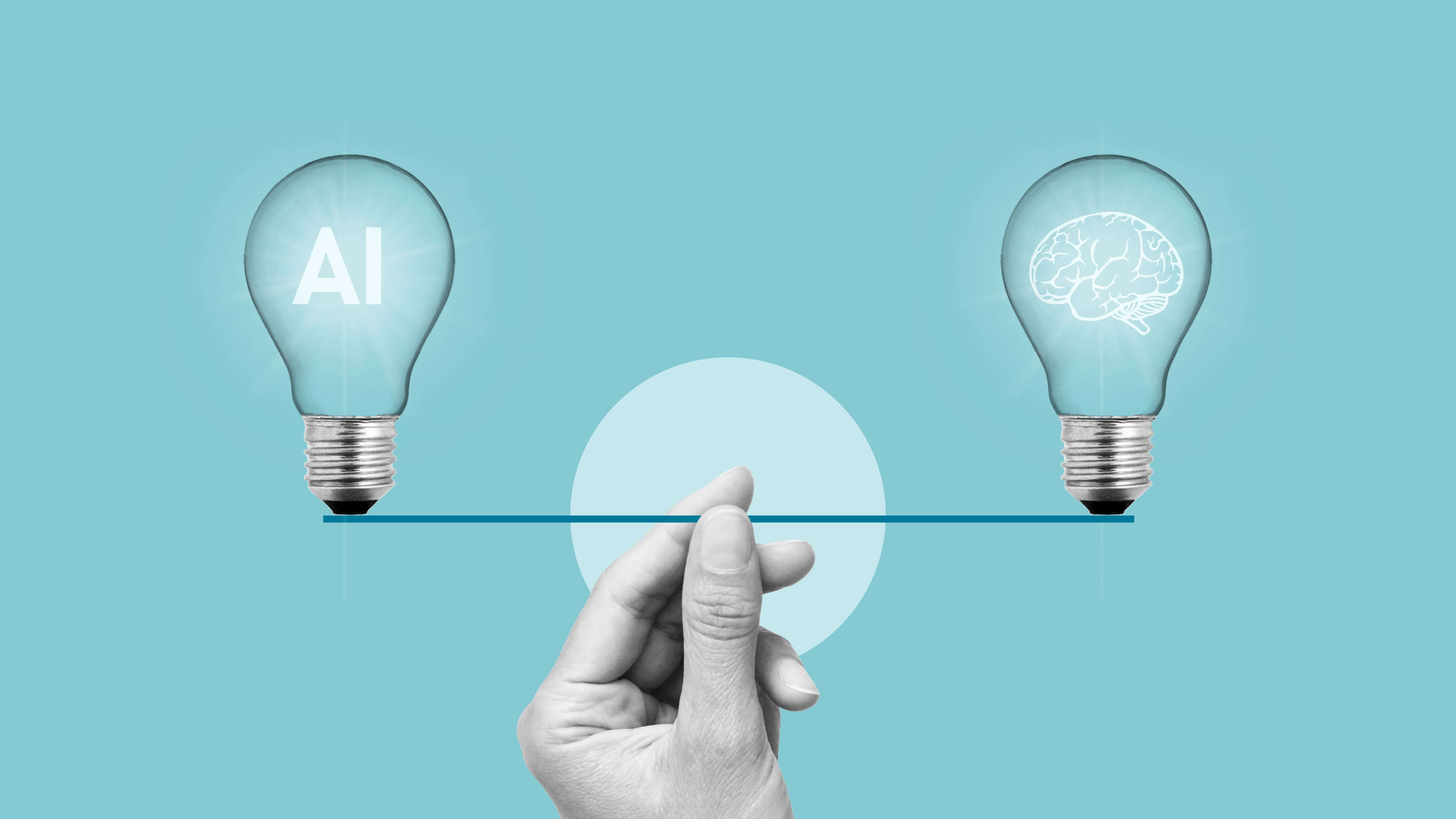
What many expected to unfold over a decade is happening now. AI can already perform work equivalent to $4.5 trillion in labour value in the US alone and 93% of jobs are now exposed to it in some way.
Yet according to research from MIT, as many as 95% of AI projects fail to deliver on their original expectations. If the technical capability exists, why are so many AI initiatives still struggling to create consistent value?
Capability has moved faster than organisations
In just a few years, AI has transitioned from being largely text-based and assistive to something far more embedded in how work is carried out. Multimodal models can now interpret images, diagrams and video, reasoning capabilities have improved the way AI handles complex decision-making, and agentic systems are beginning to take action inside business platforms rather than simply generating outputs.
As a result, the range of tasks AI can support has expanded across far more roles than many organisations expected. Exposure to AI across jobs is now rising at roughly 9% per year, compared with the 2% annual increase forecast.
Yet most organisations are not built to adapt at that speed. Planning cycles, governance models and workforce development programmes run on longer timelines. Leaders may understand what AI could deliver, but using it in day-to-day operations in a way that consistently improves performance is another matter.
Why programmes are stalling
The challenge often becomes clear after the pilot phase. Teams test new tools and see promising results, but translating those early wins into sustained, organisation-wide change proves more complex.
In some cases, businesses rely on off-the-shelf AI solutions that don’t fit their specific workflows or data. Outputs may look impressive but often lack the context needed for operational decisions. In other cases, teams are unsure how AI should reshape roles and responsibilities, so experimentation remains something that happens informally rather than becoming part of core processes.
When that happens, AI remains something people use occasionally rather than a tool the business depends on. Creating value requires integrating it into real workflows, connecting it to live systems, defining who is accountable for AI-informed decisions and ensuring oversight evolves alongside its use.
Agentic AI is changing management work
As AI becomes more agentic, its influence extends into management and business operations. Systems are increasingly able to prioritise tasks, track progress and coordinate workflows with limited human intervention.
This means that management and business operations roles that once seemed relatively insulated from automation are now among the most exposed to AI-driven change, with some seeing more than 60% of their core tasks technically open to AI support or automation. That doesn’t necessarily mean business leaders are being replaced, but it does mean a lot of their role can now be augmented or partially handled by intelligent systems.
As AI starts to shape how tasks are assigned or when issues are escalated, questions around accountability become more pressing. Organisations need to be clear on who is responsible for decisions, how results are reviewed and where human judgement still has the final say, especially in areas linked to risk, compliance and performance.
Practical skilling matters
All of this relies on people feeling confident working alongside these systems. Integration and accountability only work when teams understand what the AI is doing, when they can trust it and when a decision needs to stay with a human.
That calls for more than broad awareness sessions. As AI becomes embedded in day-to-day workflows, employees need practical, hands-on support linked to the tasks and responsibilities they manage. For example, a project manager may rely on AI to track milestones and highlight risks, while retaining responsibility for stakeholder decisions. A finance leader may use AI to model scenarios, while remaining accountable for interpretation and compliance. In each case, the tools support the work, but accountability remains human.
Because AI capabilities continue to develop rapidly, learning cannot be treated as a one-off exercise. It needs to be ongoing and closely linked to real tasks and responsibilities, so teams can adapt as tools improve.
Making AI work in the real world
AI is already doing a remarkable amount of work. The question now is whether organisations can adapt quickly enough to make it work for them.
Organisations that build AI into their core systems, set clear ownership and help teams adapt as roles change are more likely to see lasting performance gains. Those that approach AI as a series of stand-alone experiments may keep trialling tools without seeing steady results.
The organisations that benefit most will be those that redesign how work is organised around that reality, rather than assuming technology alone will deliver results.
Ollie O’Donoghue is Head of Research, UK, at Cognizant.




 Share article via email
AI Can Do The Work. So Why Is Value Still Elusive?
Thanks for signing up to Minutehack alerts.
Brilliant editorials heading your way soon.
Okay, Thanks!