Staying Focused Through Change: How Smes Can Cut Complexity And Adapt To Increasing Pressures This Financial Year
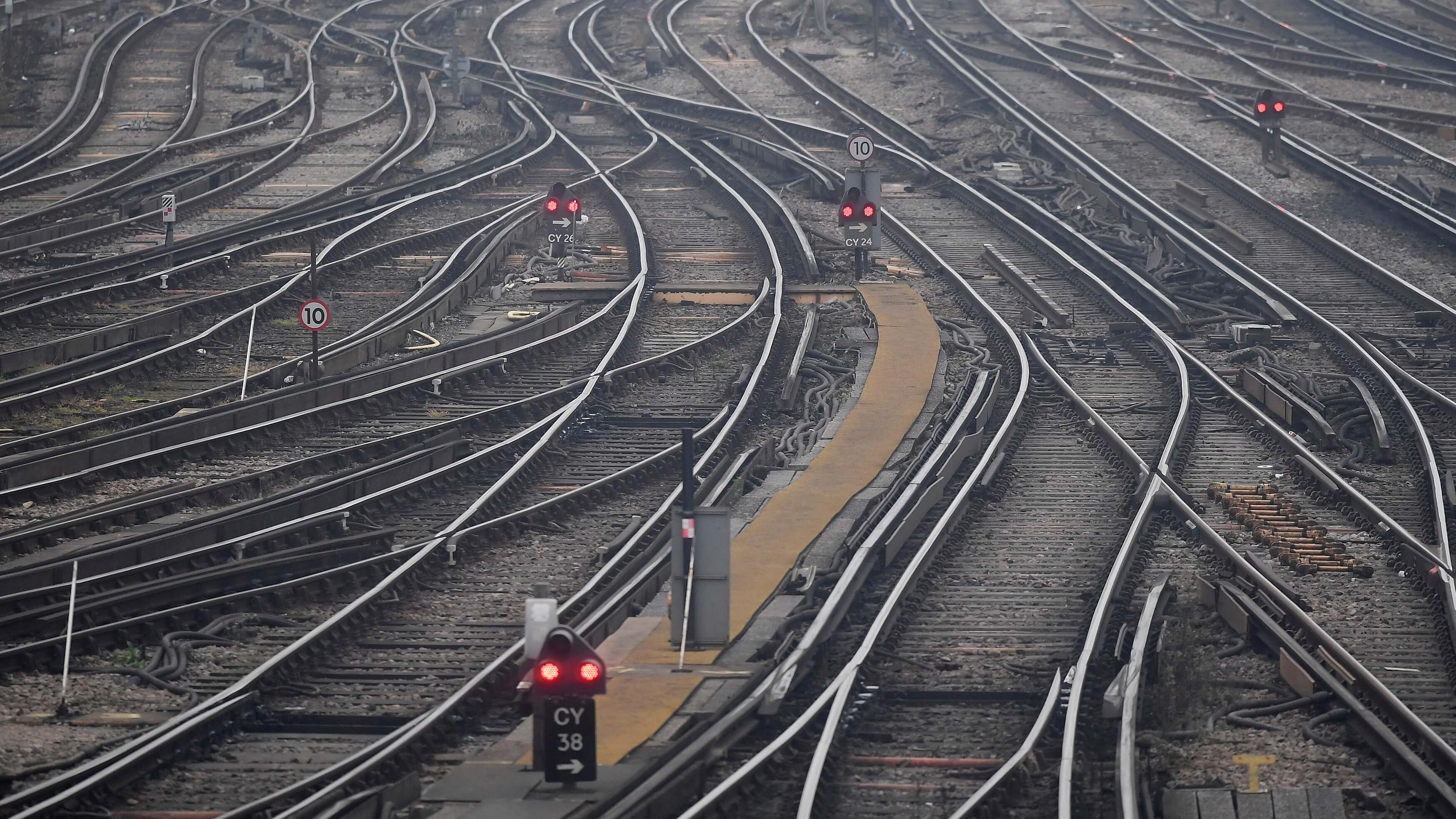
Businesses are currently operating in an environment shaped by ongoing uncertainty, cost pressures and regulatory change. Navigating this complexity requires organisations to be more deliberate about where time and attention are spent. As a result, preserving time for high-impact work is becoming increasingly important. In practice, this means ensuring employees have the headspace to identify and act on new growth opportunities, while continuing to maintain existing client relationships.
Business travel often forms a core part on acting on those opportunities. However, our research found that business travel, an integral part of securing new opportunities and maintaining client relationships, is overwhelming 63% of business travellers. What’s more, 62% feel that they spend too long comparing travel options, and 58% admit travel tasks divert focus away from their day-to-day work. But this doesn’t have to be the case. Particularly as it is often the result of booking systems that overcomplicate the process and creates additional admin for business travellers. For SMEs in particular, removing these everyday frictions can play an important role in protecting productivity and helping teams stay focused on growth.
The real impact of everyday inefficiencies
Administrative friction is easy to overlook when it does not appear as a direct cost, but its impact on productivity can be significant. When systems are fragmented, employees end up having to navigate multiple platforms, draining time and pulling attention away from higher value work. Our research shows that a third (33%) of business travellers compare journeys across several websites or apps before making a booking.
Rail is often the first choice for business travellers, with 64% preferring to book rail where possible. This should be encouraged by businesses, as while all business travel supports in‑person client meetings, partnerships and business development, rail has unique benefits.
For example, rail is much more sustainable than other modes of travel, a key benefit for businesses striving to reduce their scope 3 emissions. The London to Manchester route by train saves 20.4kg and 66.1kg of CO2 compared to driving and flying respectively. Rail is also more suited to the modern flexibility of hybrid work compared to flying, with thousands of daily services across a wide array of routes, times and tickets. Meanwhile, compared to driving, rail still offers employees space to work uninterrupted and focus on delivering important tasks. Thus, booking these journeys should be straightforward, yet in practice, disconnected systems often complicate what should be a simple task.
Why small businesses feel it most
While larger organisations often have dedicated teams to manage travel, expenses and logistics, SMEs rarely have that luxury. Instead, these responsibilities are distributed across the business, frequently pulling employees away from their primary responsibilities.
When booking systems lack clarity or consistency, people naturally find workarounds, even if that means jumping between multiple platforms to find the best option. Over time, inefficient habits can form. While this behaviour is understandable, it highlights a wider issue. Fragmented systems create unnecessary work, and for SMEs operating with limited resources, these small inefficiencies can quickly add up.
Indeed, where travel-related admin is pulling employee attention away from their core workload, any business leader should be concerned. But for SMEs, where teams are often stretched, these distractions have a significantly greater impact. What feels minor in isolation can quickly compound. Left unchecked, these small frictions quietly erode productivity.
Making travel work harder for SMEs
Face-to-face interaction is critical for building trust and securing new business opportunities, two cornerstones of long-term growth. For SMEs, travel is not just a logistical necessity, it is an essential tool for strengthening client relationships and sustaining commercial momentum, helping them move decisively at a time when margins are under pressure and confidence remains fragile.
In order for travel to fulfil that role, the experience around it needs to be seamless. When booking becomes cumbersome, it disrupts momentum at the exact moment businesses need to move quickly. Simpler processes can turn travel from an administrative burden into a strategic advantage, with 28% of business travellers saying they would be more likely to travel for growth opportunities if a single, easy‑to‑use platform with centralised information was available to support booking.
Reducing complexity to unlock growth
Too often, unclear or inconsistent systems slow progress. For SMEs navigating a challenging economic landscape, every hour and every resource counts. Simplifying internal processes will not remove external pressures, but it can significantly reduce the operational strain placed on teams. By removing unnecessary complexity, businesses can act with greater confidence, make faster decisions and stay focused on what matters most.
During an era when demands are increasing on all sides, clarity and efficiency can provide a vital competitive edge. The businesses that succeed over the coming financial year will be those that reduce friction wherever they can, turning everyday processes into enablers of growth rather than obstacles to it.
Sophie Fleming is Global Head of Trainline Business.


 Share article via email
Staying Focused Through Change: How Smes Can Cut Complexity And Adapt To Increasing Pressures This Financial Year
Thanks for signing up to Minutehack alerts.
Brilliant editorials heading your way soon.
Okay, Thanks!