The 1990 Management Book That Predicted exactly what leaders would need in the age of AI
Future entrepreneurs will have to develop what AI cannot replicate.
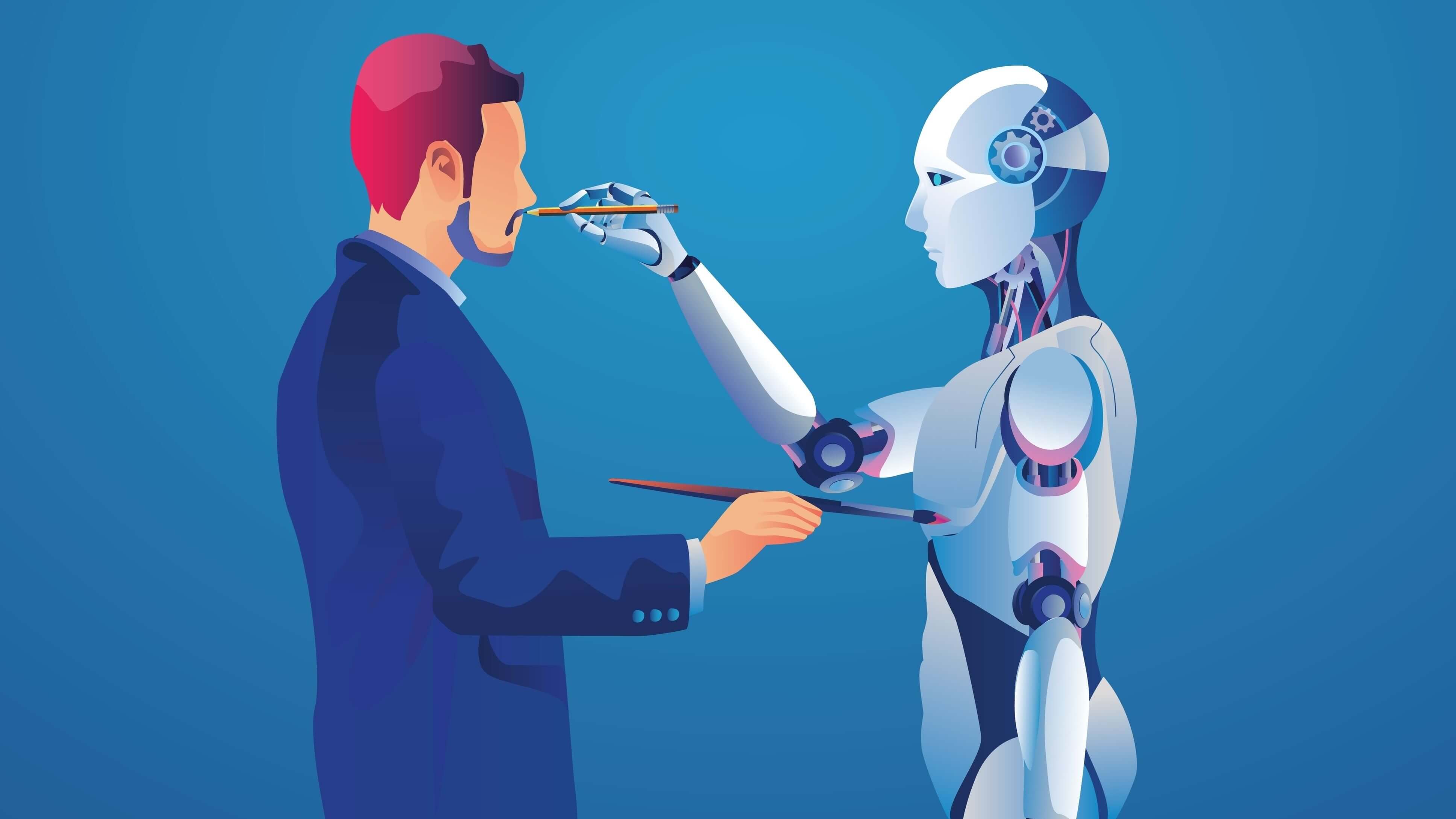
In 1990, Peter Senge published The Fifth Discipline: The Art and Practice of the Learning Organisation. Harvard Business Review recognised it as one of the seminal management books of the past 75 years.
It sold over two million copies and inspired a generation of leaders with its vision of organisations that continually expand their capacity to create the results they truly desire.
Most people who read it felt the same thing: intellectual excitement followed by implementation frustration. The ideas were right. Making them operational proved elusive. And so, for thirty-five years, systems thinking remained what it had always been: compelling in theory, frustrating in practice.
Then AI arrived. And suddenly, everything Senge predicted matters more urgently than ever.
What Senge Actually Said
Senge's framework rested on five disciplines that he argued every learning organisation needed to master. Systems thinking — the integrating discipline — was the capacity to see wholes rather than parts, to understand how elements interconnect, and to anticipate the unintended consequences of actions on a complex system.
Personal mastery was individual commitment to genuine learning and honest self-assessment. Mental models meant surfacing and examining the deeply ingrained assumptions that shape how people act, often invisibly. Shared vision meant genuine collective commitment rather than compliance with leadership's communicated goals. And team learning was the capacity for groups to think together in ways that exceeded what any individual could achieve alone.
Read that list again in 2026 and something becomes obvious. These are precisely the capabilities that AI cannot replicate.
AI optimises brilliantly towards defined objectives. It cannot determine which objectives matter. It recognises patterns in existing data. It cannot imagine possibilities that do not yet exist. It aggregates individual perspectives. It cannot participate in the emergence of genuine collective wisdom. It processes information at extraordinary speed. It cannot decide what that information means, or whether the goals it is optimising towards are worth pursuing.
Senge did not predict AI specifically. But he described, with remarkable precision, the human capabilities that the age of AI would make essential rather than optional.
The Gap Nobody Solved
Here is what Senge could not provide, and what no book alone could provide: a practical methodology for teams to actually develop these capabilities together. How do leadership teams surface mental models productively rather than defensively? How do you create genuine shared vision rather than senior leadership's vision communicated downward? How do groups develop the collective intelligence that exceeds individual thinking?
The tools Senge pointed towards faced real limitations. Causal loop diagrams remained abstract and expert-dependent. Computer-simulated microworlds required sophisticated software and removed the work from everyday organisational reality. Leaders understood what they needed to become. They had no reliable method for getting there.
This is why, thirty-five years after The Fifth Discipline was published, the learning organisation remained largely an aspiration rather than a practical reality. Not because the vision was wrong. Because the methodology to deliver it was missing.
Three Methods. One Integration.
What has changed is that the methodology now exists. Not as a single new invention, but as an integration of three approaches that have existed separately for decades and whose combination creates something none achieves alone.
LEGO® Serious Play®, developed in the late 1990s, makes invisible system forces physically tangible. Leadership teams build three-dimensional models of the systems they operate in, including the mental models, the unspoken assumptions, the invisible forces that shape every decision but never appear on a flip chart. What is hard to articulate in words becomes graspable when built with your hands. The whole team builds together, creating collective understanding rather than watching an expert draw diagrams.
Peter Senge's Fifth Discipline provides the strategic framework that gives this visible work depth and direction. It tells you what you are building towards and what to look for.
Dialogue, in the tradition of David Bohm, provides the reflective practice that transforms visible insight into genuine behaviour change. Not polite conversation or structured discussion, but collective inquiry: the suspension of assumptions, the capacity to think together rather than advocate separately, the conditions in which genuine collective intelligence emerges.
Together, these three form what I call the Systems Synergy: the integration that finally closes the thirty-five-year gap between Senge's vision and practical organisational reality.
Why This Matters Now
The organisations investing heavily in AI whilst neglecting the capabilities Senge identified are making a compounding strategic error. AI optimises towards whatever goals you give it. If leadership teams cannot think clearly about which goals matter, cannot surface the assumptions driving their decisions, cannot think collectively about complexity, AI will optimise brilliantly towards the wrong outcomes.
The entrepreneurs and executives who will navigate the next decade most effectively are not those with the most sophisticated AI. They are those who develop what AI cannot replicate, and invest in it with the same seriousness they bring to their technology decisions.
Senge saw this coming thirty-five years ago. The methodology to act on his insight has finally arrived.
Sean Blair is the founder of SeriousWork and Serious Outcomes Limited. With his associates he has trained nearly 3,000 LEGO® Serious Play® facilitators across eight countries. His new book, The Systems Synergy: Developing Human Intelligence That AI Cannot Replace, is out now. Further resources are available at seriousoutcomes.com/systems-synergy.




 Share article via email
The 1990 Management Book That Predicted exactly what leaders would need in the age of AI
Thanks for signing up to Minutehack alerts.
Brilliant editorials heading your way soon.
Okay, Thanks!