
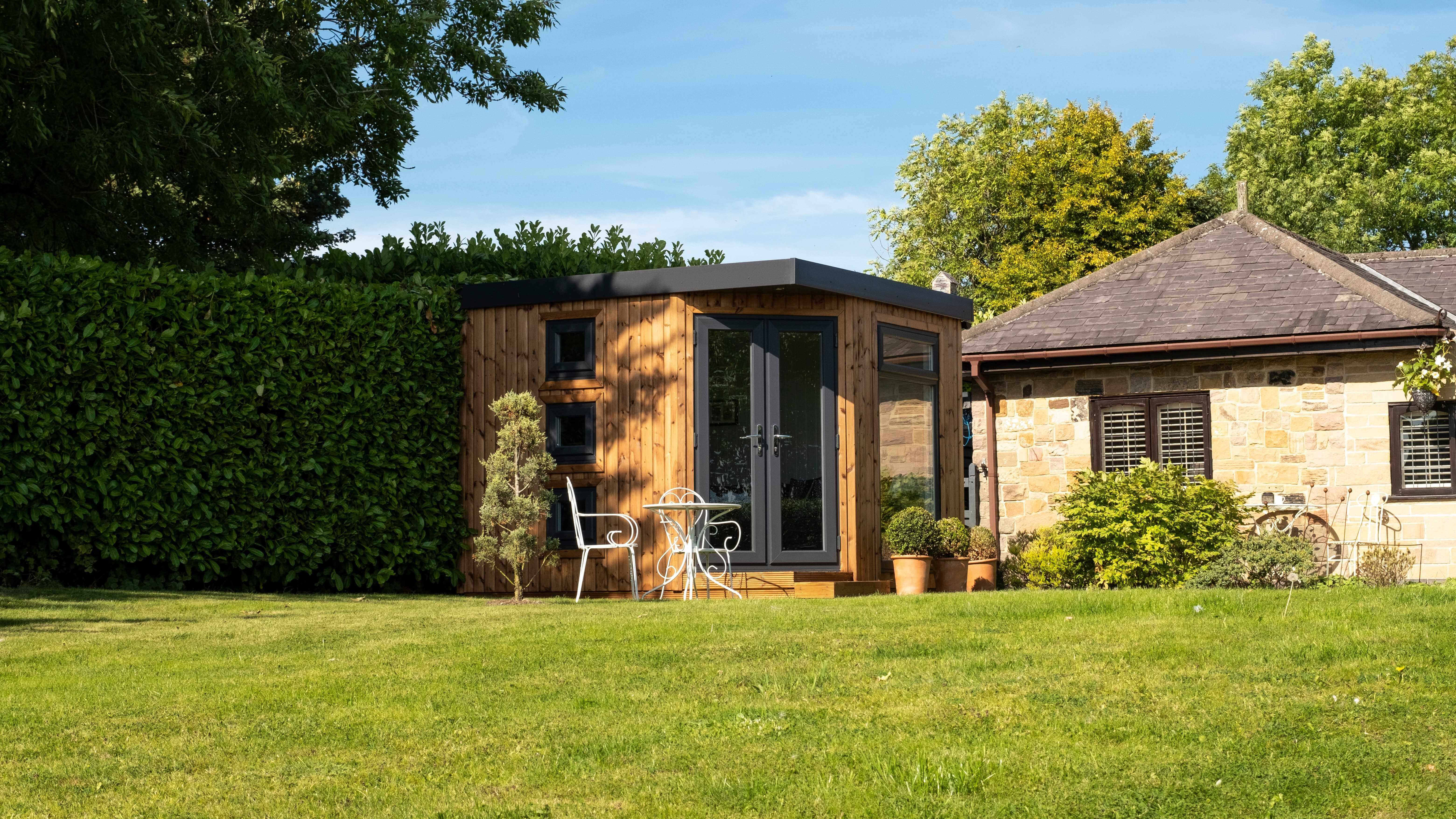
Understanding Planning Permission for Garden Rooms
A garden room is a self-contained structure typically built in a garden, separate from the main house. It’s commonly used as a home office, gym, creative studio, or relaxation space. Under UK planning law, garden rooms and home extensions are generally classified as outbuildings, and whether you need planning permission depends on how the room is built and used.
In many cases, garden rooms fall under permitted development rights, meaning planning permission isn’t required if the structure meets certain rules. These permissions are only valid for specific sizes, locations, and non-habitable uses.
Whether or not permission is needed depends on several key factors, including:
- The garden room’s height and total footprint
- Its distance from property boundaries
- Its location in relation to the main house
- Whether the property is in a protected area or is listed
When Is Planning Permission Not Required?
What Are the Permitted Development Criteria?
Permitted development rights allow many homeowners to build a garden room without applying for planning permission. However, the building must meet specific conditions.
The structure must be single-storey, located behind the main house, and clearly detached. The maximum height is 4 metres for a pitched roof, 3 metres for other roof types, and 2.5 metres if the structure is built within 2 metres of a boundary. If it exceeds any of these limits, permission is required.
In addition, the total area covered by outbuildings—including the new garden room—must not take up more than 50% of the original garden space. Any structure in front of the house, or closer to the highway than the house itself, falls outside permitted development rules.
It’s also worth noting that permitted development rights may be restricted or removed entirely for conservation areas, listed buildings, and properties in national parks.
What Types of Use May Not Require Permission?
Most garden rooms used for non-habitable purposes are allowed under permitted development. This includes home offices, hobby rooms or studios, garden gyms, and storage or workshop spaces. In fact, businesses run from garden sheds contributing £17 billion to the UK economy show how these spaces can go beyond personal use to become valuable working environments. As long as the use remains ancillary to the main house—meaning it's not used as a separate dwelling—you’re likely to stay within the rules. However, if you plan to connect utilities such as water, gas, or drainage, additional regulations may apply, especially if plumbing or permanent facilities are involved.
Garden Room Planning Permission & Permitted Development Rules | Green Retreats
When Do You Need to Apply for Planning Permission?
What If Your Garden Room Exceeds Permitted Limits?
Planning permission is required when your garden room falls outside the scope of permitted development. The most common reasons include exceeding the height limit of 2.5 metres near a boundary or constructing a building that’s too close to the front of the property.
You’ll also need permission if the structure:
- Exceeds 50% of the available garden space
- Has a height over 3 or 4 metres, depending on the roof type
- Is designed as a residential annexe or includes sleeping facilities
The intended use plays a major role. Garden rooms built for permanent habitation, such as guest accommodation or self-contained living quarters, are not considered incidental and will usually require a full planning application. Structural elements like foundations, cladding, and glazing can also influence whether the build is classed as permanent.
What About Special Cases and Protected Zones?
Certain areas have tighter planning restrictions. If your property is in a conservation area, a national park, or is a listed building, you may lose your permitted development rights entirely. In such cases, even small or temporary garden rooms might require approval.
To avoid costly mistakes, it's best to consult your Local Planning Authority (LPA) before starting work—especially if your property falls into a protected zone or has planning conditions attached from previous developments.
Applying for Planning Permission
What’s Involved in the Application Process?
If planning permission is needed, you’ll need to submit an application through your local council. This process typically involves:
- Preparing architectural drawings and site plans
- Submitting the application via the Planning Portal or council website
- Paying a fee (around £200–£300 for most domestic projects)
- Waiting for a decision, which usually takes up to eight weeks
You may want to seek pre-application advice to confirm whether permission is needed and what documents are required. Many homeowners choose to work with an architect or specialist garden room company to handle the process, especially if the build is complex or high-value.
Who Approves the Application?
All applications are reviewed by the local planning authority, who will consider the size, appearance, impact on neighbours, and compliance with local development plans. If approved, you’ll receive a decision notice confirming that you can proceed. If rejected, you may revise your proposal or appeal.
The outcome often depends on local policies and whether objections are raised during the consultation period. Even compliant designs can be refused if they affect neighbouring amenity or the character of the area.
Compliance and Legal Considerations
Do Building Regulations Apply?
Even if your garden room doesn’t require planning permission, it may still need to comply with Building Regulations. These cover structural safety, insulation, electrics, and energy efficiency. Building Regulations typically apply if:
- The garden room is over 15m² and used regularly
- It's intended for sleeping or long-term use
- It has mains electrics, heating, or plumbing installed
Garden rooms used as simple home offices or studios may be exempt, especially if under 15m² and not intended for sleeping. However, as soon as services are added or year-round use is intended, Building Control may need to be notified.
What Are the Consequences of Non-Compliance?
If you build a garden room without the necessary permissions or building regulation approvals, you risk enforcement action. Local councils can issue:
- Stop notices halting construction
- Enforcement notices requiring you to modify or remove the structure
- Fines or legal action in serious breaches
In some cases, non-compliant buildings can delay or derail future property sales. To avoid this, it’s always wise to confirm both planning and regulatory status before starting any construction. A brief consultation with your local authority can prevent costly enforcement or remedial work later.
Most read in News
Trending articles on News
Top articles on Minutehack


 Share article via email
Do You Need Planning Permission For Garden Rooms?
Thanks for signing up to Minutehack alerts.
Brilliant editorials heading your way soon.
Okay, Thanks!