

Maintaining a consistent, healthy cash flow enables businesses to operate smoothly, meet obligations, and pursue new expansion opportunities. For many companies, utilising growth finance options such as flexible credit can alleviate financial pressures during seasonal slumps or periods of rapid growth. Smart, flexible funding options help businesses adjust quickly to market changes and manage their working capital more effectively.
By combining these credit solutions with tactical strategies to improve receivables and control outgoings, businesses position themselves for stability and resilience. Managing cash flow is not only about getting finance when needed but also about implementing proactive measures that preserve liquidity and promote long-term sustainability.
As global markets encounter ongoing economic shifts, companies that focus on cash flow improvements bolster their capacity to withstand uncertainty. Adopting a comprehensive approach that includes negotiating supplier terms, tightening spend controls, and leveraging payment incentives can create a competitive advantage. Every penny saved or received earlier can be reinvested for growth or used to create a financial buffer in times of need.
Cash flow management should not be considered an annual exercise but a continuous process that evolves alongside business needs and economic realities. Monitoring analytics and data trends is vital for forecasting and swiftly reacting to changes.
Understanding Flexible Credit Solutions
Flexible credit solutions include products such as revolving lines of credit and business overdrafts that allow companies to access funds when expenses arise, without locking them into rigid repayment terms. Compared to traditional loans, these options provide a revolving facility that allows funds to be drawn and repaid as needed, helping companies handle unforeseen cash shortfalls or time-based expenditures that align with their revenue streams.
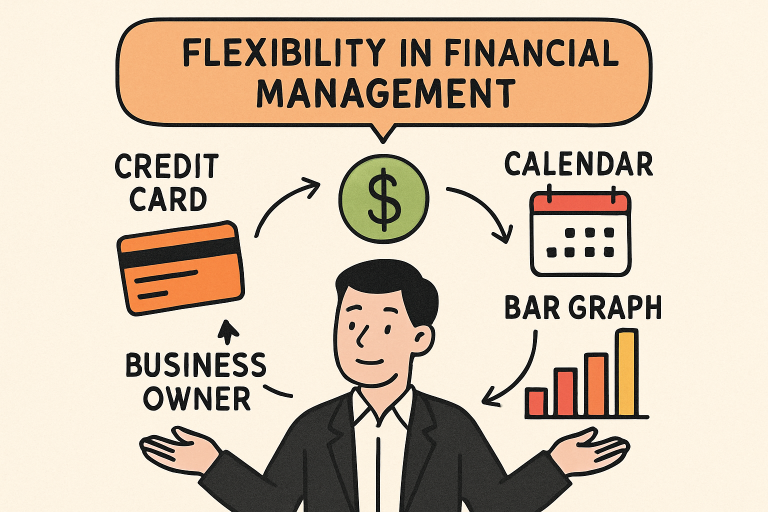
According to Forbes, businesses that integrate flexible credit into their financial planning can use these tools as both an emergency lifeline and a way to fund expansion without diluting ownership.
Benefits of Flexible Credit Solutions
Embracing flexible credit solutions provides multiple advantages:
- Improved Liquidity: Easy access to additional working capital helps cover operational costs, purchase inventory, or pay suppliers even during sales fluctuations.
- Interest Savings: Interest is often calculated only on the funds drawn, so businesses avoid unnecessary costs compared to fully disbursed loans.
- Operational Flexibility: With funds available on demand, managers can react swiftly to new business opportunities or unforeseen setbacks while keeping the core business running smoothly.
Implementing Early Payment Discounts
Providing a small discount for invoices settled ahead of schedule is a powerful incentive for clients to pay sooner, thereby reducing debtor days and improving cash inflows. For instance, offering a 2 percent discount for payment within 10 days can significantly accelerate collections. However, it’s crucial for businesses to calculate whether the benefit of faster cash inflow offsets the cost of the discount on profit margins.
According to Harvard Business Review, many industry leaders recommend balancing the terms so that a discount quickly improves liquidity without causing a material impact on profitability.
Enforcing Spend Controls
Good spending controls limit unnecessary purchases, improve budgeting, and safeguard reserves. Establishing role-based limits, requiring manager approvals, and deploying expense management software make it easier to monitor purchases and enforce policy compliance across teams. Real-time visibility is critical to preempt financial leakage and recalibrate limits as the business scales or contracts.
Negotiating Better Payment Terms
Longer supplier payment terms, such as moving from net 30 to net 60 days, keep cash within the business for longer, improving day-to-day liquidity. Open and honest discussions about payment terms can lead to mutual benefits, with suppliers receiving commitments to long-term partnerships or larger orders as part of negotiations. Such terms should be documented clearly to avoid disputes and support ongoing trust.
When both parties work collaboratively, payment terms become a key tool for optimising cash cycles.
Utilising Business Credit Cards
Business credit cards extend your payment window by allowing you to make purchases now and settle your balance several weeks later. These businesses must calculate to provide a short-term buffer for recurring costs or large, strategic purchases. Choosing a rewards-based card offers the dual benefit of delayed cash outflows and value added through points or cashback. Leveraging statement cycles, such as making purchases just after a new billing cycle starts, maximizes the float period, giving your business additional flexibility.
Leveraging Cash Flow Data
Regular analysis of cash flow data is vital. It identifies bottlenecks, highlights seasonal patterns, and supports forecasting. Reports can help anticipate when to draw on credit facilities or adjust payment policies. According to a study by FinRegLab, companies that integrate cash-flow analytics into their credit decisions often secure better lending terms than those that rely solely on conventional credit scoring. This approach is especially beneficial for startups or entrepreneurs pressed for collateral, as it allows underwriters to evaluate actual cash flow rather than credit history alone.
Conclusion
Cash flow is the pulse of any successful business. Adopting flexible credit solutions, along with sound spending controls, proactive payment incentives, and strong supplier relationships, allows businesses to build resilience, support growth, and unlock opportunities as they arise. Ongoing monitoring of cash flow data ensures these measures remain aligned with operating realities, helping leaders make confident, informed decisions in a competitive landscape.
Key Takeaways
- Flexible credit solutions can help businesses manage cash flow fluctuations.
- Implementing strategies like early payment discounts and spend controls can improve cash flow.
- Negotiating better payment terms with suppliers can provide additional financial flexibility.
Most read in News
Trending articles on News
Top articles on Minutehack


 Share article via email
How To Optimise Cash Flow With Flexible Credit Solutions
Thanks for signing up to Minutehack alerts.
Brilliant editorials heading your way soon.
Okay, Thanks!