
Technology
Scaling Customer Acquisition Beyond Referrals: Digital Growth For Pest Control Companies

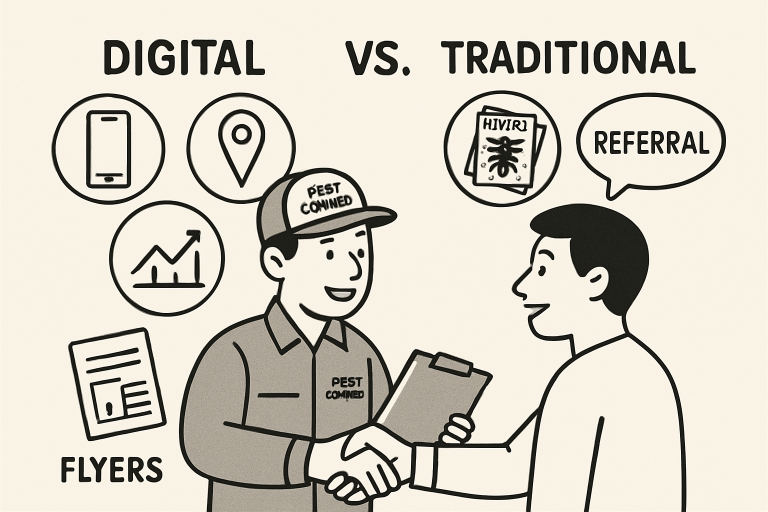
As a pest control business owner, if you’re still relying on word-of-mouth or passing out flyers, you already know how unpredictable lead flow can be. These approaches are often slow to scale and hard to measure. In today’s competitive landscape, digital channels not only offer a chance to control your growth but also deliver data-backed results. As you weigh agency partners or new strategies, remember: digital marketing tactics, mainly when run by experts familiar with the pest control space, generally provide a clear path to ROI. For example, pest control companies investing in well-optimized digital campaigns see an average 550% ROI from search engine optimization alone, outpacing almost every traditional medium.
Spending $34 per click for exterminator keywords on Google might seem steep, but it targets prospects who are actively searching for immediate solutions in your area. This precision cannot be matched by print or billboard ads. If you want consistent, predictable growth, you need systems that turn that spend into booked appointments and long-term customers. That’s where professional pest control marketing services come into play. They specialize in building full-funnel digital programs tailored for owner-operators who want to grow past a stagnant patchwork of referrals.
Digital brings another superpower that traditional media can’t compete with: data. Run a Google Ad campaign, and you see within days which neighborhoods convert best, which ad copy drives phones to ring, and, crucially, your real customer acquisition costs.
If you want to move beyond the chaos of inconsistent workflows, digital becomes your primary lever. It means knowing that each dollar invested has a measurable return, not just a vague sense of “maybe the phone will ring more this month.”
For more in-depth guidance on structuring your campaigns and optimizing spend for seasonality, check out this comprehensive pest control marketing strategy guide.
Local SEO and Google Business Profile Optimization
Nearly 78% of local mobile searches result in a purchase within 24 hours, underscoring the importance of your local online presence. For pest control companies, this starts with two foundational assets: your Google Business Profile and a local SEO strategy. Claiming, optimizing, and regularly updating your business profile means appearing in Google’s coveted Map Pack, prime real estate when someone nearby searches “bed bug control” or “termite inspection.”
It also legitimizes your business in the eyes of residents, who are increasingly wary of fly-by-night operators. Customer reviews, accurate hour listings, high-quality photos of honest technicians and equipment, and even posts about seasonal services can all nudge a prospect from browsing to booking. The more signals Google receives confirming you are active and reputable in a service area, the more likely your business is to rise above the local competition.
Additionally, local SEO, targeting keywords like “mosquito control in [City]” and ensuring your website’s content, titles, and metadata reflect your neighborhoods, can exponentially increase organic visibility. According to Search Engine Journal, 64% of consumers have used Google Business Profile to find local business contact details in the last year. You want to make sure your company is on the shortlist.
Geographic Landing Pages: Hyperlocal Visibility
Many pest control operators overlook the simple power of neighborhood- or city-specific landing pages. Each page tailored to the unique pests, testimonials, and challenges of a local market can help you rank for area searches and build trust at a neighborhood level. For example, a dedicated page for “Termite control in Oak Forest” can outperform even a well-optimized homepage when someone in Oak Forest needs fast help.
Include location-specific customer reviews, images of your work in those communities, and FAQs for regionally common pests. This approach increases relevance, which Google rewards with better rankings, and fosters immediate familiarity among residents who see their street names and familiar landmarks referenced. Geographic landing pages are the secret weapon for operators wanting to establish dominance over larger, less agile competitors.
Seasonal Dynamics: Aligning Marketing with Industry Needs
As any industry veteran knows, the pest control calendar is not flat. Q2 is usually the revenue driver: warmer weather, pests on the move, and homeowners scrambling for fast solutions. The most innovative companies ramp up ad spend, expand hours, and launch new geo pages just before peak season. The slow winter period is a goldmine for preparing fresh campaigns, updating website content, and running retargeting ads while acquisition costs are lower.
Matching your marketing tactics to these cycles can double or triple your annual lead pipeline impact. During peak months, every unanswered call or slow quote response costs much more. Investing in digital automation, call tracking, and always-on paid search ensures you capture demand rather than lose it to the competition. For more on seasonality’s effects across the industry, see Cube Creative Design's Q4 Pest Control Revenue Strategies.
Positioning Digital Marketing as a Growth Engine
The pest control vertical will be valued between $26 and $42 billion over the coming years. With consolidation rolling across the industry and national brands ramping up digital spend, local companies that ignore digital risk will fade into obscurity. The upside is enormous. Agencies that specialize in pest control regularly overhaul underperforming campaigns and help operators drive their conversion rates well beyond industry norms, sometimes increasing lead flow by 200% in a single season.
Marketing is not an afterthought nor an experiment, but a vital infrastructure investment. As the owner or manager, your primary responsibility for scaling is to allocate resources to strategies with the highest returns. In 2024 and beyond, that means digital, especially if you want your marketing dollars to turn into more booked jobs, more reviews, and a growing list of loyal, recurring contracts. The operator who gets this dialed in will not just hit seasonal targets but will become the local market leader for years to come.
Key Takeaways
- Digital marketing delivers a higher ROI and more predictable lead flow for pest control companies compared to traditional methods.
- Local SEO and Google Business Profile optimization are essential for winning high-intent customers in your service areas.
- Geographic landing pages can significantly increase visibility at the neighborhood level and drive quality leads.
- Marketing tactics should adapt to the pest control industry’s seasonal fluctuations to maximize returns.
- Given the $26–42 billion market opportunity, investing in digital is a necessity, not a nice-to-have.
Most read in News
Trending articles on News
Top articles on Minutehack


 Share article via email
Scaling Customer Acquisition Beyond Referrals: Digital Growth For Pest Control Companies
Thanks for signing up to Minutehack alerts.
Brilliant editorials heading your way soon.
Okay, Thanks!