

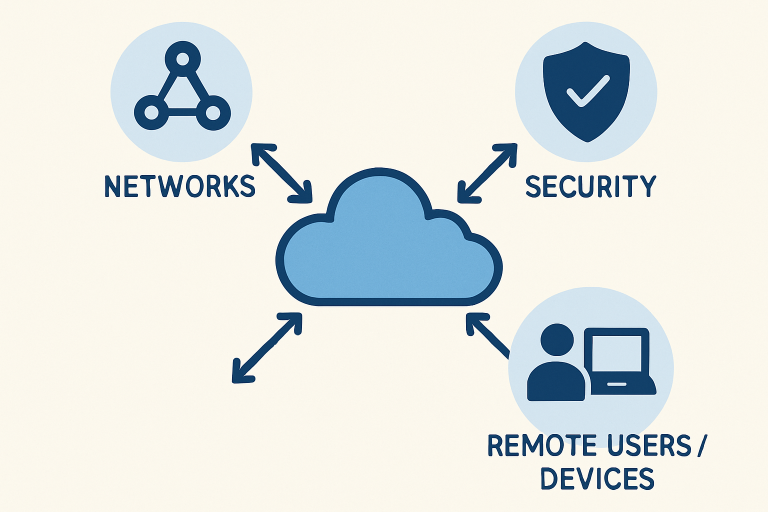
In a world where enterprise networks are rapidly shifting toward remote work and cloud-first applications, organizations face more complex challenges in ensuring security, reliability, and access at scale. This is where secure access service edge (SASE) becomes essential. SASE consolidates networking and security functions into a unified cloud-native service, redefining how modern companies manage distributed workforces and critical data. Coined by Gartner in 2019, SASE approaches networking with a security-first mindset, empowering businesses to protect assets irrespective of where users or applications reside.
By integrating security and network tools in the cloud, SASE enables organizations to enforce robust policies and safeguard data in a flexible and scalable manner. Its architecture is especially useful for enterprises experiencing rapid digital transformation, where legacy, perimeter-based architectures can no longer deliver adequate protection or consistent user experiences. As organizations increasingly look beyond their headquarters to serve employees globally, this integrated model brings core capabilities closer to end-users, improving both performance and compliance.
Core Components of SASE
SASE is composed of several interlocking technologies, each offering a layer of protection or network optimization that builds into a comprehensive defense and access strategy. At its heart, SASE weaves the following technologies:
- Software-Defined Wide Area Networking (SD-WAN): SD-WAN streamlines the performance of enterprise networks by routing data through the quickest and most reliable connections, reducing bottlenecks and enhancing productivity across branches and remote workers.
- Secure Web Gateways (SWG): SWGs monitor and control users’ internet traffic, blocking access to malicious or non-compliant sites and applying granular security policies to safeguard sensitive information.
- Cloud Access Security Brokers (CASBs): CASBs provide visibility and control over data transferred to or from cloud applications, helping organizations maintain compliance and protect their intellectual property.
- Zero Trust Network Access (ZTNA): Based on the “never trust, always verify” principle, ZTNA ensures users have access only to the applications and data they need, based on strict identity verification.
- Firewall as a Service (FWaaS): FWaaS moves perimeter firewalls to the cloud, delivering consistent protection and policy enforcement across diverse environments.
Benefits of Implementing SASE
Transitioning to SASE architecture brings a range of advantages for enterprises navigating digital transformation and hybrid work environments:
- Enhanced Security: Consolidating security technologies into a single cloud-based platform ensures that security policies are uniformly deployed and managed across all users and devices, significantly lowering the risk of breaches.
- Improved Performance: SASE’s architecture enables user data to flow through the nearest cloud point of presence, minimizing latency and providing smoother, faster access to applications, regardless of users' locations.
- Cost Efficiency: By reducing the reliance on expensive, hardware-based security appliances, organizations decrease both capital expenses and ongoing maintenance costs.
- Scalability: Built for the cloud, SASE solutions grow organically with business needs, accommodating seasonal spikes in usage and supporting business expansion into new regions with ease.
- Support for Remote Work: With secure connectivity that follows the user, SASE removes many barriers that remote or mobile workforces face in staying productive and secure, regardless of their location.
The rise of SASE reflects the significant changes documented in network security trends, where traditional models are falling short in the age of distributed cloud resources and an increasingly mobile workforce.
Why SASE Matters in Today's Networking Landscape
The shift toward remote-first operations and cloud adoption exposes the limitations of perimeter-based security architectures. Traditional WANs often struggle to balance the competing demands of efficiency, security, and user experience in this modern context. SASE, by offering a cloud-native, globally distributed solution, addresses the mounting complexity of networks and the expectation for frictionless, secure access to resources from anywhere on any device.
In the face of rising cyber threats and increasingly stringent compliance requirements, businesses are seeking holistic solutions that both simplify and enhance their security posture. SASE meets this need—its ability to provide context-aware policies and centralized visibility across a dispersed enterprise network is unmatched by legacy approaches.
Real-World Applications of SASE
Organizations in finance, healthcare, retail, and government utilize SASE to modernize data protection and ensure uninterrupted operations. For example, many small and medium-sized enterprises (SMEs), which may lack extensive in-house IT resources, are turning to SASE for its plug-and-play approach to unified security. A recent report by Network World details the adoption pace of SASE among businesses of all sizes, underscoring its flexibility in meeting the unique business and regulatory demands of various organizations.
Notably, SASE enables rapid cloud migration and remote access expansion with a single, scalable framework. By delivering security as a cloud-based service, companies can quickly deploy new capabilities and enforce policies regardless of where their data or users reside.
Challenges in Adopting SASE
Although SASE offers substantial benefits, enterprises often face hurdles during implementation:
- Integration Complexity: Existing legacy infrastructure may need significant reconfiguration to fully integrate with cloud-native SASE platforms, presenting both technical and operational challenges.
- Skill Gaps: IT teams frequently require upskilling to effectively deploy, monitor, and manage new SASE solutions and associated technologies.
- Vendor Selection: The breadth of the SASE market means organizations must carefully evaluate vendors to ensure alignment with business and compliance requirements, factoring in the scalability, support, and feature depth of various offerings.
Overcoming these challenges requires methodical planning and often involves partnering with trusted advisors or solution providers who have proven expertise in SASE deployments.
Future Outlook of SASE
SASE’s relevance will only increase as enterprises accelerate adoption of cloud technologies, remote work policies, and mobile endpoints. Security threats continue to evolve in sophistication, necessitating architectures that combine agility with comprehensive protection. According to most industry predictions, SASE will become a foundational element in the enterprise IT stack, delivering value for a broad range of use cases and company sizes.
As businesses mature digitally, those that successfully leverage SASE’s integrated, future-ready approach will be best positioned to manage risks, scale efficiently, and create secure, seamless user experiences that drive long-term success.
Final Thoughts
SASE reimagines the architecture of enterprise networks by fusing security and connectivity into a streamlined, cloud-driven solution. Its core strength lies in supporting the demands of a globally distributed workforce and a cloud-centric business environment—without compromising performance, flexibility, or security. As organizations adopt SASE, they lay the groundwork for continued growth, resilience, and innovation in the evolving digital landscape.
Key Takeaways
- SASE combines networking and security into a single cloud-native framework.
- It improves security, performance, and scalability for remote and cloud-first environments.
- Core components include SD-WAN, ZTNA, CASB, SWG, and FWaaS.
- SASE enables consistent and secure access for users, regardless of their location.
- It is becoming a foundational approach for modern enterprise networking and security.
Most read in News
Trending articles on News
Top articles on Minutehack


 Share article via email
What Is SASE And Why It Matters In Modern Networking
Thanks for signing up to Minutehack alerts.
Brilliant editorials heading your way soon.
Okay, Thanks!