How Agentic AI Can Empower Humans, Not Replace Us
AI can help structure content, but it’s the human touch that builds trust.

We exist in an era of rapidly evolving technology, with agentic AI the latest of likely many more transformations to come. But what sets agentic AI apart is that it’s leaving individuals no choice but to reimagine what it actually means to be human.
This isn’t like electricity or the internet that just made “being us” easier – it’s about more than that. Agentic AI is a technological and an existential development that is forcing us to ask ourselves what our place in the future will look like.
AI agents don’t just support us – they think, learn and act independently. These agentic AI systems are crossing the threshold from automation to autonomy, reshaping both the virtual and physical realms in which we work. And, as their ubiquity grows, their impact will only grow – causing permanent shifts to the global economy.
But in this 21st century technology gold rush, one question looms large: What does it mean to be human at work when machines can think?
The question of humanity at work
Agentic AI does far more than just execute demands. It makes decisions, adapts and learns in real-time, appearing remarkably similar to the humans it supports. In doing so, it can sometimes feel like it is encroaching on what we once considered uniquely human domains. And as a result, it is upending the workplace.
Thankfully, the truth is that machines still fall short in key areas. Emotional intelligence, ethical reasoning, contextual nuance – these are capabilities that can’t be easily coded.
And yet, today’s workforces are often under-equipped in these very areas. According to McKinsey, demand for social and emotional skills will grow by 22% in Europe by 2030. Ongoing AI development now means that soft skills like collaboration and empathy have become just as essential as technical skills and knowledge.
The solution isn't to restrict AI. It's to rethink how we design it, deploying it in a way that encourages its use to enable humans to do what they do best: be human. That means embedding AI in ways that empower, rather than overwhelm.
Amplifying humanity in the age of agentic AI
- Redefining human creativity in the corporate world
A common challenge for organisations is that enterprise tools frequently constrain creativity instead of nurture and unleash it. Half of employees have admitted to using AI tools that are easier to use or more effective over the enterprise counterparts they’re given access to, without necessarily having the permission to do so (so-called “shadow AI”). This points to a growing divide and employees who can’t do their jobs effectively with the tools provided looking elsewhere.
Leaders must understand creativity thrives when friction disappears. Let's use document generation as an example. Organisations must embed brand and legal intelligence into their documents from the start. Only then will they eliminate the need for shadow AI and make it easy for their teams to create with confidence.
Enterprise platforms should strive to integrate AI into real workflows, freeing users from tedious formatting, outdated content and compliance risks so they can focus on what matters.
- Restoring trust in human-generated communication
Everyone is being flooded with auto-generated content, which is why human authenticity is more valuable than ever. The best AI solutions preserve it. Using document generation as an example again, every solution designed for this should guarantee that every document, slide and email reflects every human behind them. The same goes for any other AI tool – they’re only as good as the human authenticity they’re able to produce.
AI can help structure content, but it’s the human touch that builds trust. Emotional nuance and contextual judgement can’t be outsourced. Trust erodes when AI is used without oversight which is why, instead of banning generative tools, companies should embed them thoughtfully into a framework that supports, rather than replaces, human intent.
- Supporting human-centric workflows at scale
Organisations building AI tools should prioritise inclusivity, multilingual support and accessibility from the start – ensuring their platforms serve diverse users across varied environments. By embedding language adaptability, regional compliance and accessibility features for different abilities into their design, they reduce the risk of shadow AI and empower all teams to work creatively and compliantly, wherever they are.
- Uplifting human accountability
A security-first approach should be foundational in any enterprise content platform. Every template or output should reinforce governance, so employee-created materials are not only on-brand but also compliant by default.
In an era of AI hallucinations, disinformation and IP vulnerabilities, built-in accountability is critical. The right platform provides a safety net which enables teams to move quickly without compromising trust. For CIOs and CTOs, this shift reduces IT burden while ensuring every AI-enabled workflow is compliant by design.
Organisations that adopt such systems often report significant time savings by reducing manual formatting and content search, while also lowering brand and legal risk.
How to preserve human values at work
Every company has a voice. A mission. A set of ethics. These values are expressed not just in strategy, but in every document or email the company and its people produce.
Companies should ensure those values persist even as AI enters the fold. The best platforms encode your company’s identity into every piece of communication, protecting it from dilution by external AI models.
This is what Templafy has done with document agents: balance intelligent automation with governance, to ensure people can focus on creativity, judgement and empathy; on ideas instead of admin.
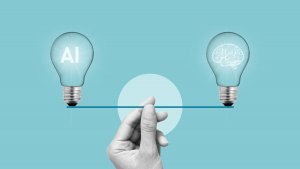
The future isn’t AI or humans. It’s AI and humans working together. So, to succeed in the age of agentic AI, we don’t need to surrender our humanity – we simply need to design systems that amplify it.
Oskar Konstantyner, Chief Product Officer, Templafy




 Share article via email
How Agentic AI Can Empower Humans, Not Replace Us
Thanks for signing up to Minutehack alerts.
Brilliant editorials heading your way soon.
Okay, Thanks!