
Business
A Practical Fire Safety Checklist for Homes, Offices, and Commercial Buildings
Key Takeaways
- Fire safety is most effective when it becomes a recurring routine.
- Alarms, extinguishers, sprinklers, exits, and emergency lighting all need regular attention.
- Clear escape routes and practiced plans help occupants act quickly under pressure.
- Commercial properties require added training, documentation, and hazard-specific planning.
- Written records make it easier to identify overdue service and unresolved problems.
Fire safety is not a one-time inspection. It is a practical routine of checking equipment, removing hazards, reviewing escape routes, and correcting small issues before they become serious emergencies. Whether the property is a single-family home, office suite, warehouse, or retail location, a clear checklist provides a dependable starting point for everyone.
Buildings also need systems that match their use and risks. For properties that require professionally designed or maintained protection, fire sprinkler systems from Columbia Fire can be part of a broader approach that includes detection, suppression, evacuation, and ongoing maintenance. Regular reviews can also help ensure that these safety measures continue to support the building’s changing needs and conditions.
Why Fire Safety Checks Matter
Small problems can have major consequences during a fire. A blocked exit, a painted smoke detector, a dead alarm battery, a damaged cord, a closed sprinkler valve, or an expired extinguisher can reduce the time people have to respond. Modern buildings may also contain battery charging stations, dense electronic equipment, open floor plans, and higher electrical demand. Review local fire codes, equipment manuals, and occupancy requirements, then use routine checks to find problems early.
Step One: Check Smoke and Fire Alarms
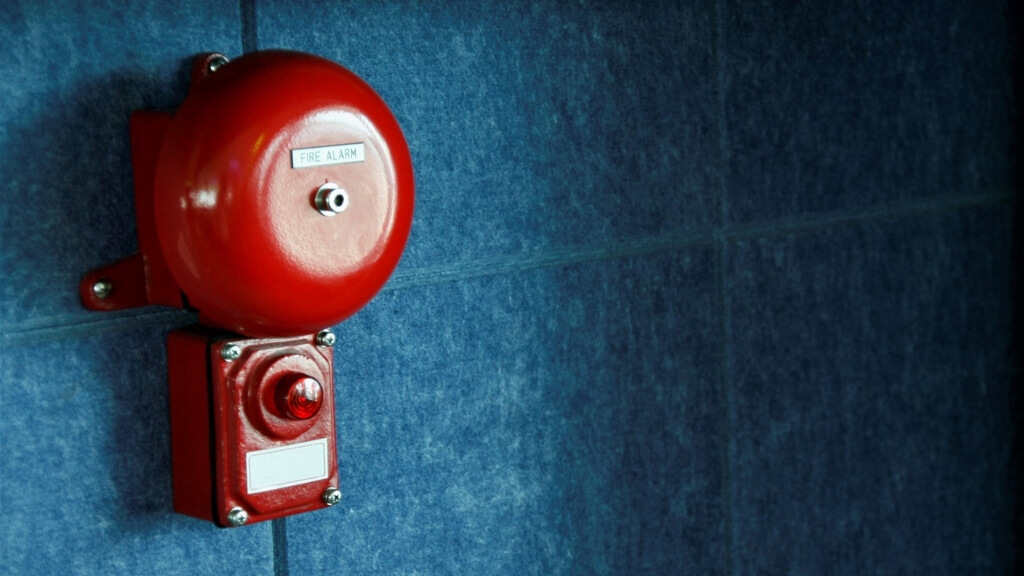
Test home smoke alarms monthly and follow the manufacturer's replacement schedule. In general, alarms should be installed on every level, inside and outside sleeping areas, and kept free of dust, paint, storage, and physical damage. The U.S. Fire Administration's guidance for working smoke alarms also emphasizes interconnected units, so an alarm sounding in one location alerts people throughout the property.
For commercial buildings, check the fire alarm control panel for trouble, fault, or supervisory signals. Do not ignore a panel warning just because the alarm is not actively sounding. Have qualified personnel investigate issues promptly and document the corrective work.
Step Two: Review Fire Extinguishers
Place extinguishers where they are visible and reachable without moving toward the fire. During visual checks, inspect the pressure gauge, safety pin, tamper seal, hose, handle, label, and cylinder for damage or corrosion. Keep the area around each extinguisher clear and ensure the signage is still visible.
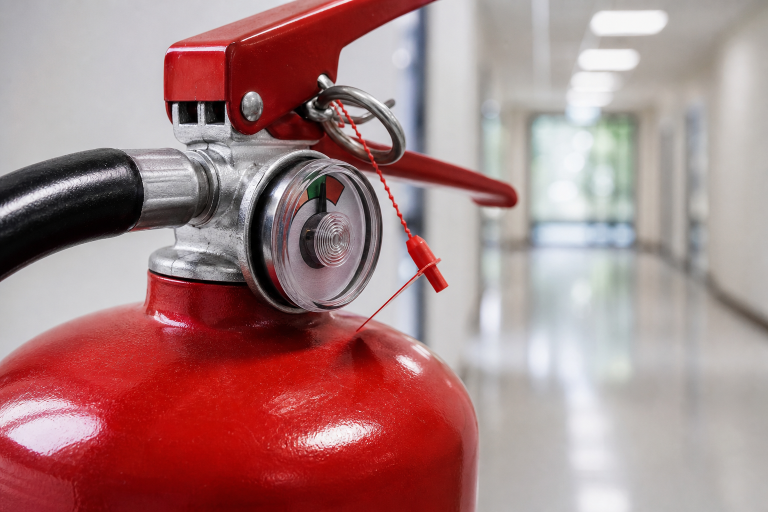
Extinguishers must match the hazard. Multipurpose units may suit many common home or office risks, while commercial kitchens, workshops, and facilities handling flammable liquids may require specialized equipment. Evacuate and call 911 before attempting to fight any fire that is spreading, producing heavy smoke, or blocking an exit.
Step Three: Inspect Sprinkler Systems
Sprinkler heads need open space to operate properly. Check for storage, shelving, signs, lighting, decorations, or other objects that block discharge patterns. Do not paint sprinkler heads, hang items from them, or use them to support wiring or displays. Look for corrosion, leaks, impact damage, missing parts, and valves not in their required positions. Testing, repairs, and system changes should be completed by qualified professionals.
Step Four: Keep Escape Routes Clear
Walk every primary exit path and look for boxes, furniture, equipment, cords, deliveries, or locked doors that could delay evacuation. Stairwells, hallways, exit doors, and exterior paths should remain accessible at all times. Test exit signs and emergency lighting, and keep fire doors closed rather than wedged open.
Step Five: Build a Simple Escape Plan
- Draw a basic floor plan for the home or workplace.
- Identify two exits from each room when possible.
- Choose a safe outdoor meeting place away from the building.
- Assign help for children, visitors, older adults, and people with mobility needs.
- Practice the plan at least twice each year.
- Remind everyone never to return inside for belongings.
People may have very little time to leave after the alarm sounds. Practice helps occupants recognize alarms, move toward exits, and account for one another without confusion.
Step Six: Reduce Common Fire Hazards
Cooking Areas
Keep towels, paper products, packaging, and other combustibles away from burners and hot equipment. Clean grease from cooking surfaces and ventilation areas. Never use water on a grease fire.
Electrical Equipment
Replace damaged cords and cracked plugs, avoid overloaded outlets and power strips, and investigate hot outlets, burning odors, or scorch marks immediately. Keep chargers and batteries on stable, noncombustible surfaces.
Heating and Storage Areas
Keep heaters clear of furniture, curtains, clothing, and boxes. Maintain vents and schedule seasonal service when needed. Store flammable liquids in approved containers away from ignition sources, exits, electrical panels, and sprinkler equipment.
Step Seven: Adjust the Checklist for Commercial Buildings
Commercial properties need a more detailed approach. Review the emergency action plan, assign fire wardens or coordinators, train employees on alarms and assembly areas, and include visitors, contractors, and temporary workers in procedures. Pay special attention to kitchens, warehouses, laboratories, workshops, server rooms, and battery charging areas. Track alarm tests, extinguisher service, sprinkler inspections, drills, repairs, and staff training.
Step Eight: Keep Useful Fire Safety Records
Use a shared digital folder or maintenance log to store inspection dates, service reports, alarm tests, repair notices, extinguisher checks, sprinkler valve inspections, drill attendance, and corrective actions. Clear records help owners and managers confirm what was completed, identify repeated issues, and provide useful information to service professionals or authorities having jurisdiction.
What to Do When a Safety Problem Is Found
- Record the issue and its exact location.
- Remove an immediate hazard if it is safe to do so.
- Notify the property owner, manager, or designated safety lead.
- Arrange for a qualified inspection or repair work.
- Update the record once the issue is corrected.
- Check related equipment for similar problems.
Common Questions About Fire Safety Checklists
How often should a property receive a fire safety review?
Perform simple visual checks regularly, test equipment according to manufacturer instructions, and schedule formal inspections based on local rules, building type, occupancy, and hazard level.
Can an owner inspect equipment alone?
Owners and managers can complete basic visual checks, but professional testing, repairs, system design changes, and compliance work may require qualified technicians.
What happens if a fire alarm or sprinkler system fails?
Report the failure immediately, protect occupants, follow the building's temporary safety procedures, and arrange repair as quickly as possible.
Conclusion
A strong fire safety plan is visible, simple, and practiced. Regular checks can reveal aging alarms, blocked exits, unsafe storage, damaged equipment, and overlooked maintenance needs before they create greater risk. By making this checklist part of routine property care, homes and businesses can better protect people and prepare for an emergency.
Most read in News
Trending articles on News
Top articles on Minutehack


 Share article via email
A Practical Fire Safety Checklist for Homes, Offices, and Commercial Buildings
Thanks for signing up to Minutehack alerts.
Brilliant editorials heading your way soon.
Okay, Thanks!