

Mastering behavioural interviews is critical for today’s job seekers. Employers look for insights into your past actions to predict how you might perform in the future, making it vital to prepare in a way that highlights your strengths and genuine experiences. During the interview, demonstrating soft skills, critical thinking, and professionalism is crucial. For candidates aiming to perform well, reviewing typical behavioral interview questions and preparing authentic answers is a key step toward success.
Behavioral interviews are structured to move past generic responses and uncover how you’ve managed real-life work scenarios. This interview method is valued by employers for its ability to highlight a candidate’s adaptability, problem-solving skills, and collaboration. By focusing on specific past situations, you give interviewers a window into the action-oriented qualities that often set candidates who thrive apart from those who simply go through the motions.
Understanding Behavioural Interviews
Behavioral interviews focus on concrete examples from your professional history. Instead of asking candidates how they might act in hypothetical scenarios, interviewers request detailed accounts of prior experiences. These exchanges help employers assess core competencies such as leadership, communication, teamwork, and the ability to navigate challenges. According to Indeed experts, insights from behavioral interviews make it easier to determine which candidates are likely to excel in a company’s environment.
Preparing for Behavioural Questions
Preparation starts with self-reflection. Review your resume and jot down stories that emphasize your achievements or demonstrate your ability to overcome setbacks. Think about specific projects, notable collaborations, or conflicts you helped resolve. Focus on the results and the skills you used to achieve positive outcomes. With a catalog of relevant stories, you’ll be ready to tailor your responses to the competencies most valued for the job you’re pursuing.
Informational interviews and job postings can provide additional insights into what skills employers may be looking for in behavioural interviews. Checking sites like Forbes helps candidates understand evolving interview trends and specific questions gaining traction, equipping them with material that goes beyond standard responses.
The STAR Method
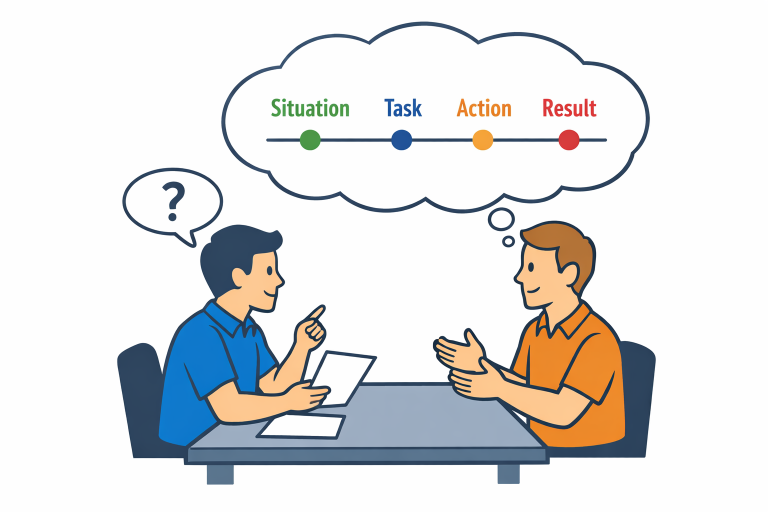
Organizing your answers using the STAR method brings structure and clarity to your responses. The method stands for:
- Situation: Set the context for your story, giving enough detail for the interviewer to understand the environment.
- Task: Explain the specific challenge or responsibility in that scenario.
- Action: Describe the steps you personally took to address the challenge or complete the task.
- Result: Highlight the outcomes or what you learned from the experience.
The STAR approach keeps your stories focused and impactful, making it easier for interviewers to follow your logic and evaluate your effectiveness.
Common Behavioural Interview Questions
The best way to prepare for behavioural interviews is to practice with common questions. Typical prompts include:
- "Tell me about a difficult problem you solved."
- "Describe a time when you made a mistake and how you handled it."
- "Can you give an example of when you had to meet a tight deadline?"
- "How did you handle working with someone with whom you did not get along?"
These questions test your resilience, ability to handle adversity, and communication under pressure. Structuring your answers around real examples increases your credibility and helps the interviewer visualize your potential contributions.
Practicing Your Responses
Practicing answers to behavioral interview questions out loud solidifies your recall and boosts confidence. Consider recording yourself or engaging in mock interviews with a mentor or career coach. Constructive feedback helps you identify areas where you tend to go off track or add irrelevant details. Being concise while providing relevant facts is a hallmark of strong interview performance.
Leveraging Authenticity
Genuine stories resonate more than rehearsed or embellished narratives. Interviewers appreciate candidates who can speak candidly about their experiences, including their own mistakes. Honest reflection reveals adaptability, learning, and growth potential. Approaching each answer with openness and integrity sets you apart and demonstrates you are both self-aware and team-oriented.
Utilizing AI Tools
Technology is changing the way candidates prepare for behavioral interviews. AI-powered tools now offer realistic interview simulators, deliver feedback, and even tone analysis to help improve your presence. Practicing with AI systems can reveal patterns in your answers and highlight gaps in your prep that might not be obvious in traditional mock interviews. Career experts highlight these tools for their ability to deliver customized, data-driven advice, increasing your readiness before facing an actual interviewer. Additional information on the use of AI in interview preparation is available at The Wall Street Journal.
Conclusion
Success in behavioral interviews requires thoughtful preparation, structured responses, and authenticity. By focusing on past experiences that highlight your skills and adaptability, using frameworks like the STAR method, and embracing new technological tools, you can distinguish yourself from other candidates. Authentic communication, backed by real achievements and lessons learned, will leave a strong impression and enhance your chances of securing the job.
Most read in News
Trending articles on News
Top articles on Minutehack


 Share article via email
Behavioural Interview Techniques For Job Seekers
Thanks for signing up to Minutehack alerts.
Brilliant editorials heading your way soon.
Okay, Thanks!