

Artificial Intelligence (AI) is fundamentally transforming the landscape of disability claims. Increasingly, government agencies and insurance providers are turning to AI-based systems to help manage the high volume and complexity of disability applications. The Social Security Administration (SSA), for instance, has introduced tools like the Hearing Recording and Transcriptions (HeaRT) system and the Intelligent Medical Language Analysis Generation (IMAGEN) tool to automate data extraction and claim analysis, speeding up determinations and reducing delays for applicants. While these systems hold incredible promise, users and legal professionals must also consider practical considerations, including ChatGPT limitations for ERISA claims.
AI’s role goes beyond simple automation. By sifting through extensive medical records, labor histories, and claimant statements with machine learning, AI can spot patterns and flag relevant data faster than human reviewers alone. These advances enable agencies to handle backlogs more efficiently during periods of increased demand, enhancing both the speed and the consistency of initial determinations. However, this rapid integration of AI raises its own set of considerations for all stakeholders.
Benefits of AI Integration
The transition to AI-powered claims processing brings a variety of potential benefits:
- Efficiency: AI models, trained on large datasets, can instantly review and categorize thousands of claims, greatly reducing the turnaround time compared to traditional manual review processes.
- Consistency and Accuracy: Automated systems apply predefined eligibility rules, supporting uniformity in decisions and decreasing the chance of human error or oversight.
- Resource Allocation: By relieving adjudicators of routine data analysis and paperwork, AI enables experts to focus on more complex or borderline cases, thereby improving the use of scarce resources.
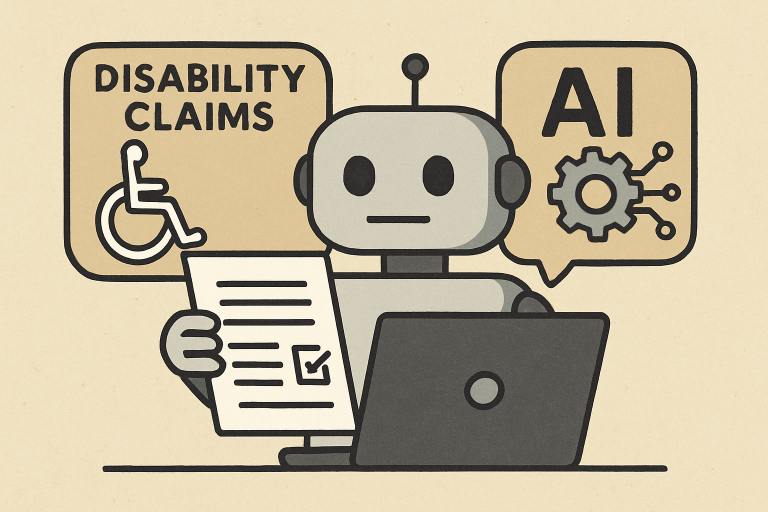
AI technology is helping to address longstanding logistical challenges within both public and private disability claim systems. According to a report by The Washington Post, the Social Security Administration has updated its outdated jobs database, which had been used to deny disability claims based on obsolete occupations. This modernization effort aims to improve the accuracy and fairness of claim evaluations.
Potential Risks and Ethical Concerns
As promising as AI-driven systems are, they present critical risks that must be carefully managed:
- Bias and Discrimination: Algorithms trained on historical data can unintentionally embed or amplify systemic biases. This is especially risky for marginalized groups, including people with disabilities, racial minorities, or low-income applicants. AI-driven tools in related fields, such as child welfare, have already demonstrated how bias can lead to unfair or discriminatory outcomes.
- Transparency: Many AI algorithms utilized in government and insurance operations are proprietary and difficult to audit. Lack of transparency can make it almost impossible for claimants to understand the reasoning behind denials or approvals, depriving them of meaningful recourse and appeals.
- Data Privacy: Disability claim applications contain sensitive personal and medical information, posing risks of leaks or misuse if robust protections are not in place.
Ensuring Ethical AI Deployment
Safeguarding fairness and building public trust in AI-driven disability claim systems demands a proactive and multi-pronged approach:
- Inclusive Development: Engage diverse stakeholders, including those with disabilities, advocates, and legal experts in designing and testing AI models. Their input helps address overlooked needs and mitigates potential biases before full-scale implementation.
- Ongoing Audits: Regular, independent evaluations should root out both explicit and implicit biases in decision-making processes, ensuring that models remain accurate and fair over time.
- Transparency and Redress: Agencies must publish clear explanations about how AI algorithms operate and offer real avenues for applicants to appeal and contest questionable decisions.
Real-World Implications
The practical impact of AI tools in disability claims is apparent in real-world situations. A widely reported case involved a couple targeted by child protective services after an AI tool flagged their household. Despite having no history of neglect, the family struggled against opaque decisions influenced by AI-derived risk scores. Such incidents reveal just how vital it is to critically examine where, how, and why AI models are used to make consequential decisions. Without adequate oversight, innocent families and claimants may suffer undue hardship due to flawed or biased algorithms.
Major news outlets like The Washington Post have documented similar occurrences, reinforcing the importance of transparency, accountability, and reform wherever AI is leveraged to make or inform life-altering determinations.
Future Outlook
As AI systems become increasingly sophisticated, their role in disability claim processing will only deepen. Emerging solutions promise more accurate analysis, better language processing, and real-time flagging of case inconsistencies. However, effective oversight—including public input, legislative review, and routine audits- will be essential for promoting equity and preventing harm. The future hinges on integrating technological advances with a robust ethical framework, ensuring AI supports rather than undermines justice and fairness in disability rights.
Final Thoughts
Artificial Intelligence offers unprecedented benefits for the disability claims ecosystem. By blending automation with ethical oversight and inclusive design, AI can deliver faster, more consistent, and fairer outcomes. Still, vigilance against bias, commitment to transparency, and the prioritization of claimants' rights must always remain at the core of progress, ensuring technology truly serves all members of society.
Key Takeaways
- AI technologies are streamlining disability claim processes, increasing efficiency and reducing human error.
- Significant concerns remain about bias, transparency, and ethical oversight in AI-driven decision-making.
- Effective AI implementation involves diverse stakeholders, transparent methods, and regular auditing.
Most read in News
Trending articles on News
Top articles on Minutehack


 Share article via email
How AI Tools Are Shaping Disability Claims
Thanks for signing up to Minutehack alerts.
Brilliant editorials heading your way soon.
Okay, Thanks!