

Key Takeaways
- VFDs can produce high-frequency electrical noise, harmonic current, and additional heat during normal operation.
- Cable routing, grounding, ventilation, and correct drive sizing strongly affect system reliability.
- Higher switching frequencies can reduce audible motor noise, but they can also increase drive heat and require output-current derating.
- Reactors and filters must be selected for the specific drive, motor, voltage, cable length, and operating conditions.
- Temperature, current, alarms, vibration, and noise trends can reveal developing problems before a shutdown occurs.
Table Of Contents
- Why Noise And Heat Matter
- How VFDs Create Electrical Problems
- The Main Causes Of Noise And Heat
- A VFD Installation Checklist
- When Filters And Reactors Help
- Cable Routing And Grounding Practices
- Cooling, Enclosures, And Ambient Conditions
- Testing And Maintenance Steps
- Common Mistakes To Avoid
- Conclusion
Variable frequency drives, or VFDs, give motors useful speed control, but they also change the electrical environment around the motor system. Fast switching, long cable runs, poor grounding, and inadequate cooling can create interference and heat that shorten component life or disrupt nearby controls. An isolation transformer can be part of a broader input-side strategy when the application calls for electrical separation or improved power-quality management.
Reliable results come from treating the drive, motor, cables, enclosure, power supply, and control wiring as one system. A pump may appear to run normally, for example, while its drive creates sensor faults at higher speeds or its motor insulation experiences repeated voltage stress. Finding those conditions early is usually simpler and less costly than waiting for an unexpected trip or failure.
Why Noise And Heat Matter
Electrical noise can interfere with analog sensors, communication lines, programmable controllers, and instrumentation. Heat affects more than the VFD itself. It can accelerate aging in cable insulation, motor windings, capacitors, fans, and power connections. A system that has no active alarm is not automatically free of electrical or thermal stress, so maintenance teams should watch for gradual changes rather than relying only on fault codes.
How VFDs Create Electrical Problems
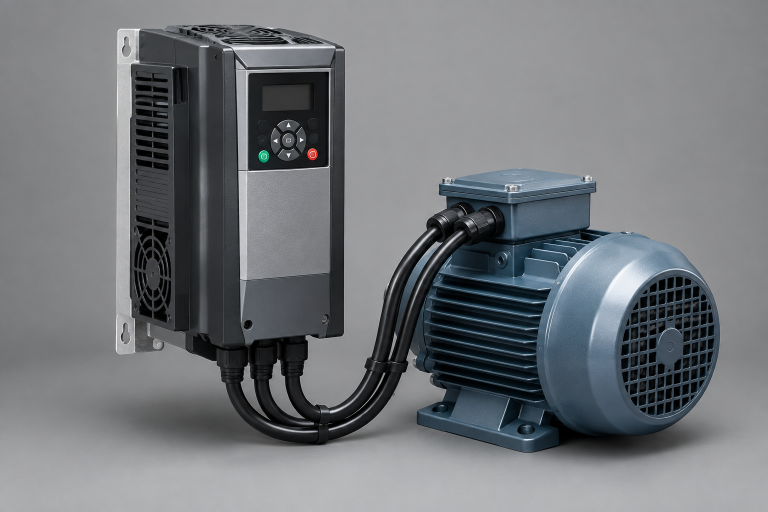
A VFD receives incoming AC power, converts it to DC, then uses switching devices to produce a variable-frequency output for the motor. The motor receives a pulse-width-modulated waveform rather than utility sine-wave power. Those fast voltage transitions can create harmonic current on the line side and high-frequency effects on the motor side, including common-mode voltage, reflected waves, and electromagnetic interference.
The severity depends on the full installation. Drive settings, motor construction, cable type and length, grounding quality, load characteristics, and nearby sensitive equipment all matter.
The Main Causes Of Noise And Heat
High Switching Frequency
Increasing the carrier frequency can move the motor sound into a less noticeable range. However, higher switching frequency also increases switching losses in the drive. Some drives require a lower output-current rating at higher carrier-frequency settings, so always use the manufacturer's derating information before changing this parameter.
Long Motor Cable Runs
Longer motor leads add cable capacitance and can increase reflected-wave voltage at the motor terminals. This may place added stress on motor insulation and increase common-mode current. Cable length should be reviewed during design, not after a motor begins tripping or showing insulation-related symptoms.
Poor Grounding And Harmonics
High-frequency current follows different paths than ordinary power-frequency current. Weak bonds, discontinuous grounding conductors, painted connections, and poorly bonded conduit can create unwanted noise paths through control wiring and metalwork. On the input side, harmonic current can add losses and heating in conductors, transformers, and other distribution equipment, particularly where multiple drives operate on the same system.
Restricted Cooling
Blocked vents, dirty filters, failed fans, crowded cabinets, and high room temperatures all limit heat removal. A VFD enclosure also needs the clearances specified by its manufacturer so heat sinks and cooling airflow can work as intended.
A VFD Installation Checklist
- Confirm motor voltage, full-load current, horsepower, duty cycle, and service conditions.
- Size the drive for the actual load requirements, including overload and ambient-temperature conditions.
- Review motor-cable length, type, shielding, routing, and termination method.
- Keep motor power cables separated from low-voltage control, network, and instrumentation wiring.
- Verify continuous protective grounding and proper bonding of enclosures, conduit, and cable trays.
- Confirm that the motor is suitable for inverter-fed service when the application requires it.
- Record baseline current, voltage, temperature, vibration, and alarm-history information.
When Filters And Reactors Help
No single device solves every VFD issue. The right mitigation depends on where the disturbance starts and which equipment is affected.
- Input reactors can reduce the effect of line transients and help limit current distortion in suitable applications.
- Output reactors can reduce the severity of the waveform delivered through motor leads and may help on moderate cable runs.
- dV/dt filters slow the voltage rise at the motor terminals and can reduce insulation stress.
- Sine-wave filters create a smoother motor voltage waveform and may be appropriate for long motor-cable installations or sensitive applications.
Cable Routing And Grounding Practices
Installation details often determine whether a drive system operates quietly. Keep motor leads away from analog signals and communications wiring. Use shielded or armored cable where the design requires it, and terminate shields according to the drive and cable manufacturers' instructions. Avoid unnecessary cable loops and long parallel runs. A low-impedance protective grounding path, along with correctly bonded metal enclosures and conduit, helps manage high-frequency current. Signal ground is not a substitute for protective grounding.
Cooling, Enclosures, And Ambient Conditions
Build a thermal review into the design and maintenance process. Measure the highest expected room temperature, account for heat from drives and nearby components, and confirm that the enclosure can reject that heat while maintaining its required protection rating. Dust, moisture, corrosive air, altitude, direct sunlight, and clogged filters can all affect cooling performance. The Department of Energy's variable speed drive maintenance guidance also supports planned inspections and performance monitoring throughout the equipment life cycle.
Testing And Maintenance Steps
- Inspect: Check for dust, loose terminations, damaged insulation, blocked vents, and discoloration from overheating.
- Measure: Record line voltage, current balance, motor temperature, enclosure temperature, and grounding continuity.
- Listen: Investigate new buzzing, whining, rattling, or changes in normal motor sound.
- Review: Check fault history, overload settings, switching frequency, acceleration settings, and speed limits.
- Trend: Compare new measurements with previous readings to identify gradual deterioration.
- Correct: Address the root cause before adding filters, increasing drive size, or changing several settings at once.
Common Mistakes To Avoid
- Raising switching frequency without checking output-current derating.
- Installing a filter without verifying its location, voltage rating, current rating, and compatibility.
- Routing motor and control cables together over long distances.
- Ignoring cable length when selecting the drive, motor, and output protection.
- Using a general-purpose motor where inverter-duty construction is needed.
- Placing a drive in a hot or dusty enclosure with inadequate airflow.
- Assuming a lack of alarms proves that power-quality or insulation-stress issues do not exist.
Conclusion
Reducing VFD noise and heat starts with system-level planning. Review switching settings, cable layout, grounding, filtering, enclosure cooling, and maintenance data together. Measure the installation, correct the source of the problem, and track performance over time. This approach reduces stress on the drive, motor, cables, and connected controls while supporting more dependable operation.
Most read in News
Trending articles on News
Top articles on Minutehack


 Share article via email
How To Reduce Electrical Noise And Heat In VFD Motor Systems
Thanks for signing up to Minutehack alerts.
Brilliant editorials heading your way soon.
Okay, Thanks!