

Payroll is no longer just about cutting checks—it’s about creating efficiency, accuracy, and transparency in a rapidly changing workplace. With remote and hybrid teams, evolving compliance requirements, and rising employee expectations, outdated payroll processes can quickly become a liability.
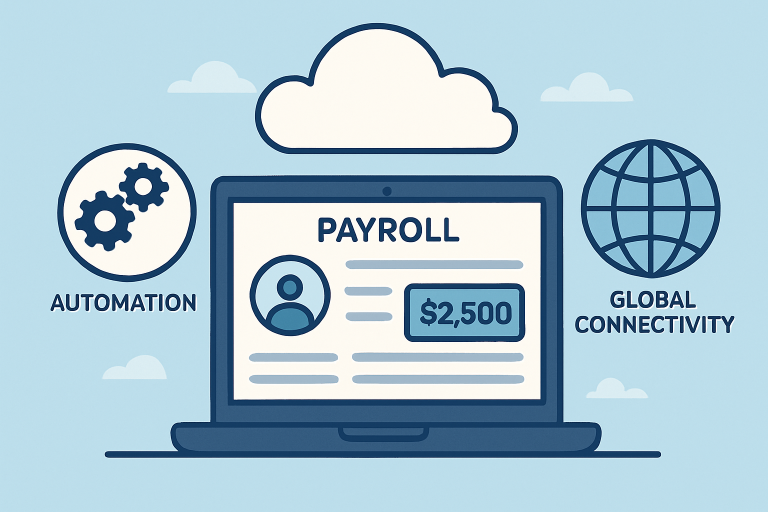
Modern payroll solutions leverage automation, cloud technology, and integrated systems to simplify complex tasks while reducing errors and administrative burden. By streamlining payroll, businesses save time and resources and enhance employee trust and engagement, ensuring their workforce is supported in every pay cycle.
Modern payroll management demands a forward-thinking approach as workforces become increasingly dispersed and business environments become more complex. The rise of remote work, contingent employment, and evolving legal requirements has exposed the limitations of legacy payroll processes. Today’s organizations must act swiftly to ensure both compliance and efficiency. Leveraging technology improves accuracy and helps reduce payroll errors and penalties—a critical concern for businesses facing heightened scrutiny from tax authorities and regulatory bodies.
Relying solely on manual payroll calculations or outdated software increases the risk of missed deadlines, misclassified employees, and incorrect tax withholdings, all of which can result in costly mistakes. Embracing digital transformation mitigates these risks and streamlines the entire payroll function—fostering a more reliable, scalable, and employee-friendly system for modern teams.
Challenges in Modern Payroll Management
The shift to hybrid and global work arrangements brings unprecedented complexity to payroll. Employers now manage multi-state and even multi-country payrolls, juggle differing labor laws, and must accurately calculate taxes and deductions for a remote and mobile workforce. This can lead to payroll teams feeling overwhelmed as they try to keep up with fluctuating regulations, disparate employment contracts, and increased demand for pay flexibility among employees.
Organizations are also contending with the rising expectation for real-time payroll processing. Employees want access to pay as soon as they've earned it, and errors or delays can erode trust and satisfaction. Traditional, monthly-based payroll cycles are giving way to more dynamic, on-demand pay models, which introduce further operational challenges.
Embracing Automation and AI
Companies are turning to automation and AI-driven platforms that offer speed, accuracy, and adaptability to meet these demands. Automated systems streamline repetitive processes such as time tracking, wage calculations, and tax reporting, dramatically reducing the risk of human error. Advanced AI payroll software can also flag anomalies, enforce compliance checks, and predict future payroll liabilities using historical data.
Research from the Information Services Group confirms that flexibility is a driving force behind adopting AI-driven payroll solutions. These tools allow employers to scale operations effortlessly and stay ahead of regulatory changes. Real-world implementations significantly reduce processing time and operational costs, helping organizations focus more resources on their strategic goals.
Adopting Cloud-Based Solutions
Cloud-based payroll solutions provide unmatched flexibility and scalability, especially for businesses with a geographically diverse workforce. These platforms enable instant access to data from anywhere, streamline updates, and offer seamless integration with HR, benefits, and time-tracking systems. Perhaps most importantly, cloud systems improve payroll security by centralizing sensitive information and implementing robust backup protocols.
Studies show that businesses deploying cloud-based payroll are better positioned to adapt to business growth, enter new markets, and adjust to regulatory changes with minimal disruption. In addition, real-time visibility into payroll data allows leaders to make faster, more informed financial decisions. Employees also benefit from user-friendly portals that enhance transparency and reduce payroll-related errors. Over time, these efficiencies translate into significant cost savings and stronger organizational resilience.
Ensuring Compliance in a Global Workforce
Expansion beyond local borders amplifies compliance challenges. Each region enforces unique tax laws, social security requirements, and employment regulations. Automated payroll systems with built-in compliance capabilities are essential for global employers to avoid inadvertent violations and hefty fines. These platforms can automate tax calculations, instantly update regulatory changes, and generate region-specific reports—giving HR teams and executives peace of mind.
Companies like IBN Technologies and other payroll providers are prioritizing compliance tools to help businesses operate seamlessly across dynamic, international environments, dramatically minimizing compliance risk and administrative overhead.
Enhancing Employee Experience
Modern payroll platforms elevate the employee experience far beyond timely payments. Integrated self-service portals allow employees to view earnings, access pay stubs, update direct deposit details, or request pay advances on demand. Features such as mobile apps and real-time notifications further empower workers, fostering transparency and trust. Investing in these technologies helps businesses attract and retain top talent while meeting evolving workforce expectations. In addition, personalized financial wellness tools embedded in payroll systems give employees better control over budgeting and savings. These enhancements not only strengthen engagement but also reduce the administrative burden on HR teams. Ultimately, streamlined payroll experiences create a more supportive and future-ready workplace culture.
Data-Driven Insights for Strategic Decisions
Modern payroll systems do more than deliver paychecks—they equip leaders with actionable workforce intelligence. Powerful analytics modules can reveal trends in labor costs, evolving compliance exposure, or payment timing preferences. Organizations that leverage this data gain a significant advantage in workforce planning, budgeting, and policy development.
Data-driven payroll empowers HR and finance leaders to anticipate needs, optimize spend, and align operational strategy with business objectives. Insightful dashboards transform payroll from a back-office function into a strategic driver for company growth and resilience.
Conclusion
Succeeding in today’s fast-paced, globally connected business climate requires an accurate, flexible, and future-proof payroll process. By adopting automation, cloud-based technologies, robust compliance features, and employee-centric platforms, organizations set themselves up for long-term success. Continuous payroll innovation drives efficiency and supports business growth—protecting companies from penalties while ensuring employees feel valued and empowered.
Most read in News
Trending articles on News
Top articles on Minutehack


 Share article via email
Streamlining Payroll For Modern Workforces
Thanks for signing up to Minutehack alerts.
Brilliant editorials heading your way soon.
Okay, Thanks!