

Table of Contents
- Introduction
- The Evolution of Podcasts in Political and Cultural Conversation
- Impact on Public Opinion and Engagement
- Accessibility and Inclusivity
- Challenges and Criticism
- The Future of Podcasts in Political and Cultural Dialogue
- Conclusion
Introduction
Over the past decade, podcasts have rapidly transformed from a niche medium to a central player in how society consumes information, tells stories, and engages in meaningful conversation. As millions of listeners tune in daily, podcasts have firmly established themselves as a powerhouse in media, offering diverse perspectives and real-time commentary on everything from local news to global events. Many of today’s top podcasts—such as the 13th & Park—deliver in-depth discussions that span politics, technology, culture, and more. Even industry-specific outlets like the Ballard Partners podcast shed light on complex political and business issues, further illustrating the expanding influence of podcast content.
Political and cultural podcasts, in particular, wield tremendous influence in shaping public understanding and sparking civic engagement. They provide a platform where hosts and guests can explore complex topics well beyond the soundbite-driven limits of traditional news. As mainstream audiences grow increasingly dissatisfied with legacy media, podcasts offer a refreshing alternative for those eager to question, learn, and participate in contemporary political and cultural discourse.
The Evolution of Podcasts in Political and Cultural Conversations
In the pre-digital era, most political and cultural conversations unfolded within the narrow confines of print newspapers, television broadcasts, and radio shows. Access to broad audiences was tightly controlled, often leaving underrepresented viewpoints on the margins. The digital age, however, has fundamentally disrupted these traditional gatekeepers, ushering in the podcast era where anyone with a microphone and internet connection can share their perspective.
The rise of the podcast has democratized content creation and encouraged robust debates that reflect a far wider spectrum of society. Shows like "13th & Park" have become exemplars of this trend, bringing together experts, activists, and everyday people to discuss issues from diverse viewpoints. These discussions not only elevate underrepresented voices but also foster nuance in a polarized media landscape.
Impact on Public Opinion and Engagement
With their informal tone and unfiltered conversations, podcasts can have a profound impact on how audiences perceive key issues. Listeners are often exposed to in-depth analysis and diverse viewpoints absent from mainstream coverage. For example, programs like "Pod Save America" and "The Daily" have been credited with clarifying complex policy debates and motivating civic participation, especially among younger demographics.
This influence is backed by research; studies indicate that podcast audiences are more likely to be politically engaged and informed. According to the Pew Research Center, users who consume news through digital-first platforms, such as podcasts, tend to exhibit higher levels of political knowledge and participation than those who primarily receive their news from social media.
Accessibility and Inclusivity
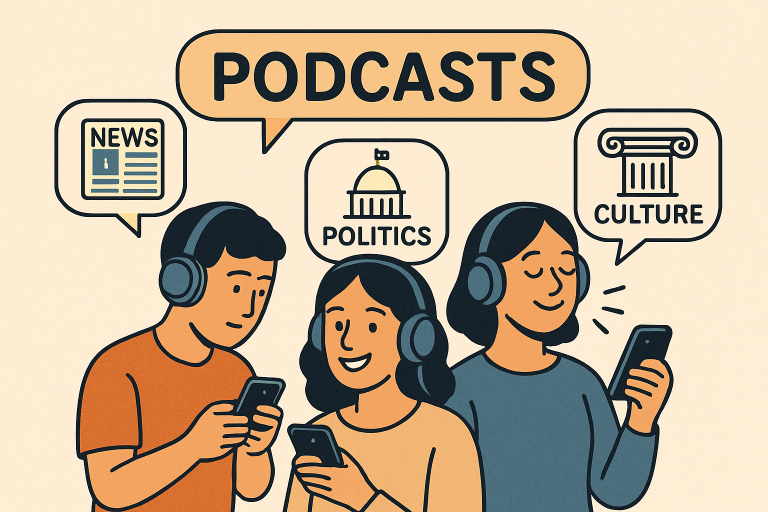
One of the unique strengths of podcasting is its accessibility. Audiences can listen on smartphones while commuting, exercising, or doing household chores—making it easy for individuals to stay informed regardless of their schedules. Free from the economic barriers associated with cable or print media subscriptions, podcasts can reach broad and diverse audiences, including young listeners and marginalized communities.
Many podcasts focus specifically on topics that are frequently overlooked in mainstream conversations. Shows like "Code Switch" and "The Nod" have gained attention for highlighting racial issues and cultural identity. At the same time, other programs delve deeply into the lived experiences of LGBTQ+ communities, immigrant communities, or disabled communities, ensuring their stories are heard and valued.
Challenges and Criticisms
Despite their many strengths, podcasts are not without shortcomings. The open nature of podcast publishing means that not all content is held to rigorous editorial standards, and some shows may perpetuate bias or spread misinformation. Concerns about the accuracy and fairness of information have become particularly acute in the context of politics, where the line between informed commentary and outright speculation can blur quickly. An analysis by The New York Times highlights how misinformation can gain traction on digital platforms, including podcasts.
As their role in public discourse grows, podcast creators are increasingly responsible for fact-checking claims, disclosing potential conflicts of interest, and seeking out diverse perspectives. This ethical accountability is critical for maintaining audience trust and ensuring that the medium serves as a force for thoughtful conversation rather than division.
The Future of Podcasts in Political and Cultural Dialogue
Looking ahead, podcasts are well-positioned to expand their influence even further. Enhanced production values, interactive features, and improved discoverability will continue to attract larger, more diverse audiences. The flexibility of the format creates opportunities for podcasts to bridge ideological divides, humanize complex issues, and promote empathy across differences.
As technology evolves, so too will the ways we create, consume, and share podcast content. With continued prominence, podcasts could become one of the most powerful tools for fostering mutual understanding in a fragmented media environment.
Conclusion
Podcasts play a pivotal role in shaping modern political and cultural conversations by amplifying underrepresented perspectives, fostering deeper understanding, and promoting civic engagement. However, listeners must remain discerning, critically evaluating sources and seeking out a range of viewpoints to gain a full picture of any issue. As the medium matures, both creators and audiences share in the work of cultivating a vibrant, trustworthy realm of public dialogue.
Most read in News
Trending articles on News
Top articles on Minutehack


 Share article via email
The Role Of Podcasts In Shaping Public Discourse On Politics And Culture
Thanks for signing up to Minutehack alerts.
Brilliant editorials heading your way soon.
Okay, Thanks!