
From its tense summit with China to the eleventh-hour trade agreement with the US, late July laid bare the EU's economic vulnerability in a global trade system increasingly defined by power politics and protectionism. Caught between two economic heavyweights – both aggressively backing their industries and weaponising trade – the EU’s long-standing status as a trade superpower is under serious threat. Indeed, the bloc’s capitulation to Trump to secure its trade deal is sending all the wrong signals to Beijing as EU-China relations continue to sour.
In a position of isolation and perceived weakness, the EU must urgently reinforce its economic defences. That means advancing a coherent, proactive industrial strategy to bolster the export sectors at the core of EU competitiveness, such as aviation, agri-food and automotive, before they are undercut by redirected Chinese overcapacity or retaliatory tariffs. The path forward requires calls for targeted support for European producers, smart incentives to boost internal demand, and a firm diplomatic posture in upcoming trade negotiations.
China’s mounting challenge to EU’s economic backbone
At the July 25 EU-China summit, Ursula von der Leyen warned Xi Jinping that bilateral relations had reached an “inflection point,” with the EU Commission president citing growing economic imbalances. The numbers tell the story: the EU’s trade deficit with China has more than doubled in a decade, hitting €305.8 billion in 2023.
European frustration is mounting as its competitiveness-driving industries come under pressure from waves of cheap, state-subsidised Chinese goods. With domestic demand in China weakening and the U.S. imposing new tariffs, fears are growing that Chinese overcapacity will flood the EU market, eroding the competitiveness of Europe’s manufacturers. Beijing, meanwhile, has shown little sign of addressing the structural roots of this growing problem.
Indeed, China’s subsidy-driven manufacturing boom is steadily edging out EU goods from its market in core industrial sectors like aviation and automotive, with EU exports to China falling by roughly half a percentage point of GDP in recent years. Germany has been particularly affected, with a nearly 70% drop in automotive exports to China between 2022 and 2024 a key factor behind its current economic stagnation.
On the agri-food front, China has since mid-2024 been conducting anti-dumping and anti-subsidy investigations into EU pork and dairy exports, placing EU producers from targeting products from key exporting countries like France, Ireland and Denmark firmly in the crosshairs. While no new duties or export restrictions are in place yet, punitive measures could hit by late 2025, echoing China’s recent 34.9% tariff on EU brandy. Beijing’s moves are widely viewed as retaliation for the EU’s tariff hikes on Chinese EVs.
Auto-sector support from Franco-German engine
In a bid to push back against China’s growing trade pressure, Germany approved a €46 billion tax relief package in July to revive its industrial base – particularly the struggling auto sector. Key measures include purchase incentives for electric vehicles.
Central to the package is an “investment booster” programme featuring accelerated tax depreciation, allowing companies to write off up to 75% of electric vehicle costs in the first year to stimulate domestic EV demand and production until 2035. Germany is also expanding its EV charging network, targeting one million points by 2030, while exploring industrial zones and targeted investment grants to reshore manufacturing and boost economic resilience.
Meanwhile, in France, industry leaders and policymakers are advancing a novel idea to level the playing field with Asian auto manufacturers: a Nutri-Score-style label for cars. With the competitiveness gap between Chinese and French factories having widened by nearly 30% since COVID, the proposed label aims to promote local production by indicating the share of European-made components in each vehicle – a figure its backers would like to see set at 80% in the coming years.
The label, modelled on the food sector’s colour-coded Nutri-Score, is being championed as both a transparency tool and a lever for directing public subsidies. At July’s high-profile Rencontres Économiques in Aix-en-Provence, Valeo CEO Christophe Périllat brought the idea to the fore, with the public backing of French Industry Minister Marc Ferracci. The minister’s office has since confirmed that state support will be tied to battery plants sourcing a minimum share of European inputs and locally-refined metals.
Nutri-score: ironic inspiration for ‘buy local’ label
While the fledgling ‘auto Nutri-Score’ idea does not yet have consensus backing from the industry, it has not generated anywhere near the amount of controversy as its French nutrition label inspiration. Indeed, Nutri-Score has for years elicited strong opposition from EU farmers for its stigmatisation of core EU agri-food products, making it an ironic source model for a solution designed to support local automotive producers.
Since 2020, Nutri-Score has triggered divisions among member-states, with its flawed grading system unfairly penalising emblematic heritage products such as Spain’s jamón ibérico and France’s Bleu d’Auvergne – among the EU food champions directly threatened by China’s ongoing anti-subsidy investigations and potential tariffs. Crucially, Nutri-Scores’s narrow focus on fat, sugar and salt content ignores the wider dietary benefits of nutrient-rich heritage foods, thus significantly undermining the competitiveness of products vital to the EU’s agricultural export strength.
Nutri-Score’s latest algorithm update – arguably a tacit admission of the system’s shortcomings – has only deepened concerns. Whole milk now receives a “C” rating, astonishingly placing it on the same level as Diet Coke and adding entirely unnecessary pressure to Europe’s dairy sector, already in China’s sights. Over time, resistance to Nutri-Score has gained traction at the national level, with governments in Portugal, Greece, Czechia, and Switzerland voicing strong concerns about the label’s impact on traditional foods, with this growing pressure eventually reaching Brussels.
In recent months, the European Commission – guided by Agriculture Commissioner Christoph Hansen and his more farmer-focused vision – has decisively shifted away from Nutri-Score, providing crucial support to the EU agri-food industry in a moment of significant geopolitical and trade turbulence.
Looking ahead, the EU cannot afford to see its automotive, agri-food and other strategic export sectors gradually undermined by external pressure and internal hesitation. As China and the US press forward with assertive economic agendas, Europe must respond with a unified, forward-looking strategy that reinforces its competitiveness, industrial base and position as a global trade power. In a world increasingly shaped by power politics, only a confident, coordinated Europe can safeguard its prosperity and credibility.
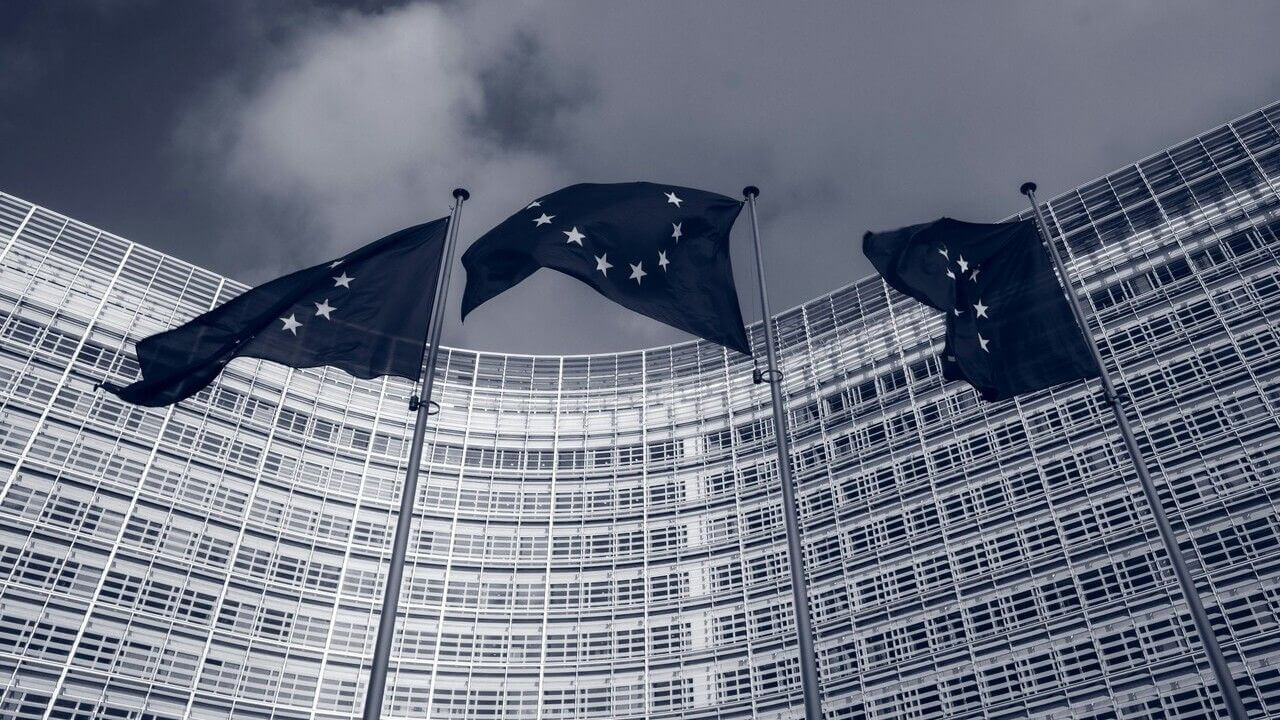
Photo by Christian Lue on Unsplash
Most read in News
Trending articles on News
Top articles on Minutehack


 Share article via email
China Plays Hardball But Can The EU Protect Its Export Champions?
Thanks for signing up to Minutehack alerts.
Brilliant editorials heading your way soon.
Okay, Thanks!